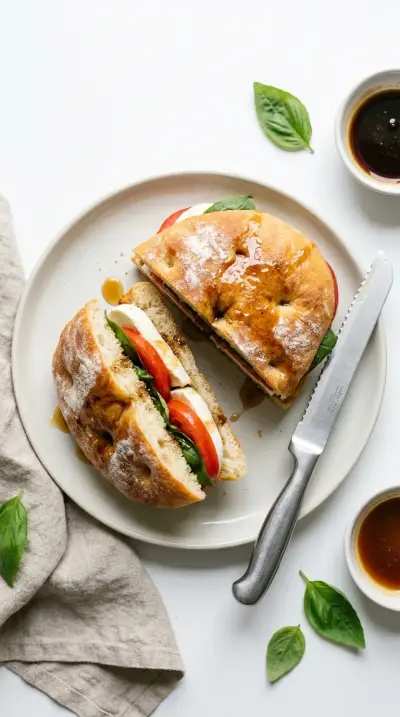
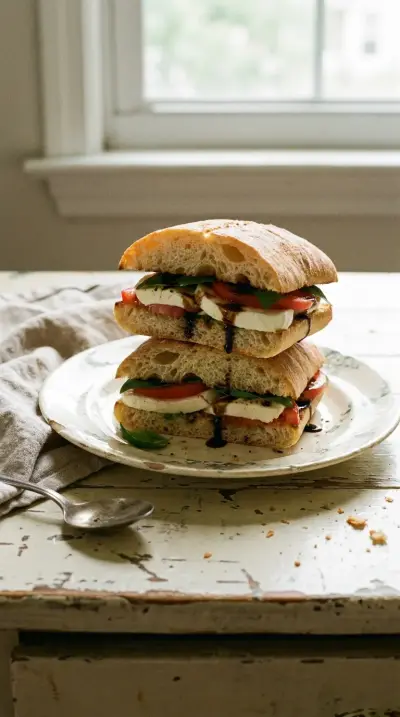
Vegan Caprese Sandwich: Italian Tomato and Basil Roll
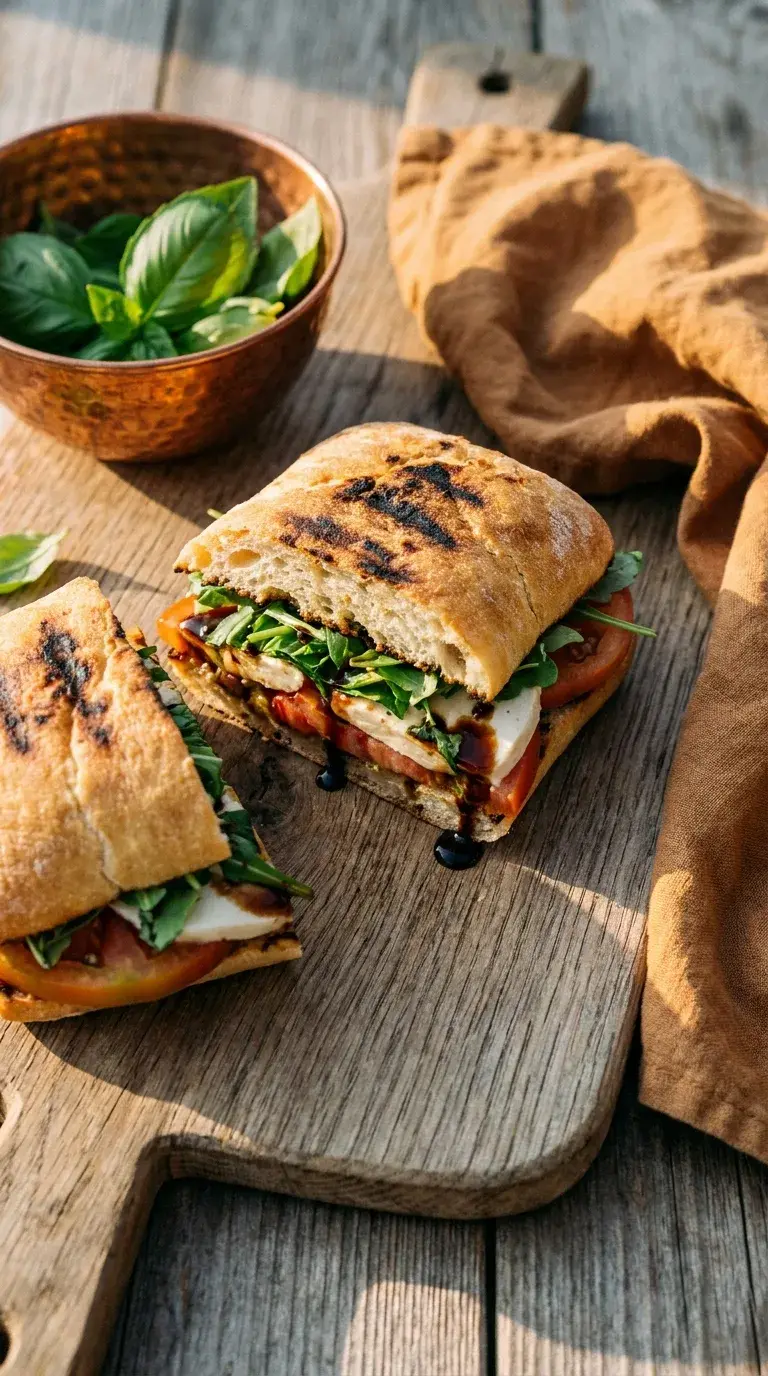
This vegan caprese sandwich relies on the quality of the bread and produce. Use a sharp knife to slice the ciabatta while leaving the crust intact so the fillings stay secure. Layer arugula first to create a peppery base that protects the bread from moisture. Add sea salt and pepper to the olive oil before layering the cheese to ensure the seasoning penetrates every bite. Roast under-ripe tomatoes at 190°C (375°F) for 10 minutes to concentrate their natural sweetness.
Vegan Caprese Sandwich: Italian Tomato and Basil Roll
Recipe cardIngredients
Watch how it's made
Instructions
-
Prepare the bread
Slice the ciabatta roll lengthwise with a sharp knife. Keep the crust intact. This ensures the sandwich holds together during assembly and grilling.
-
Apply the base
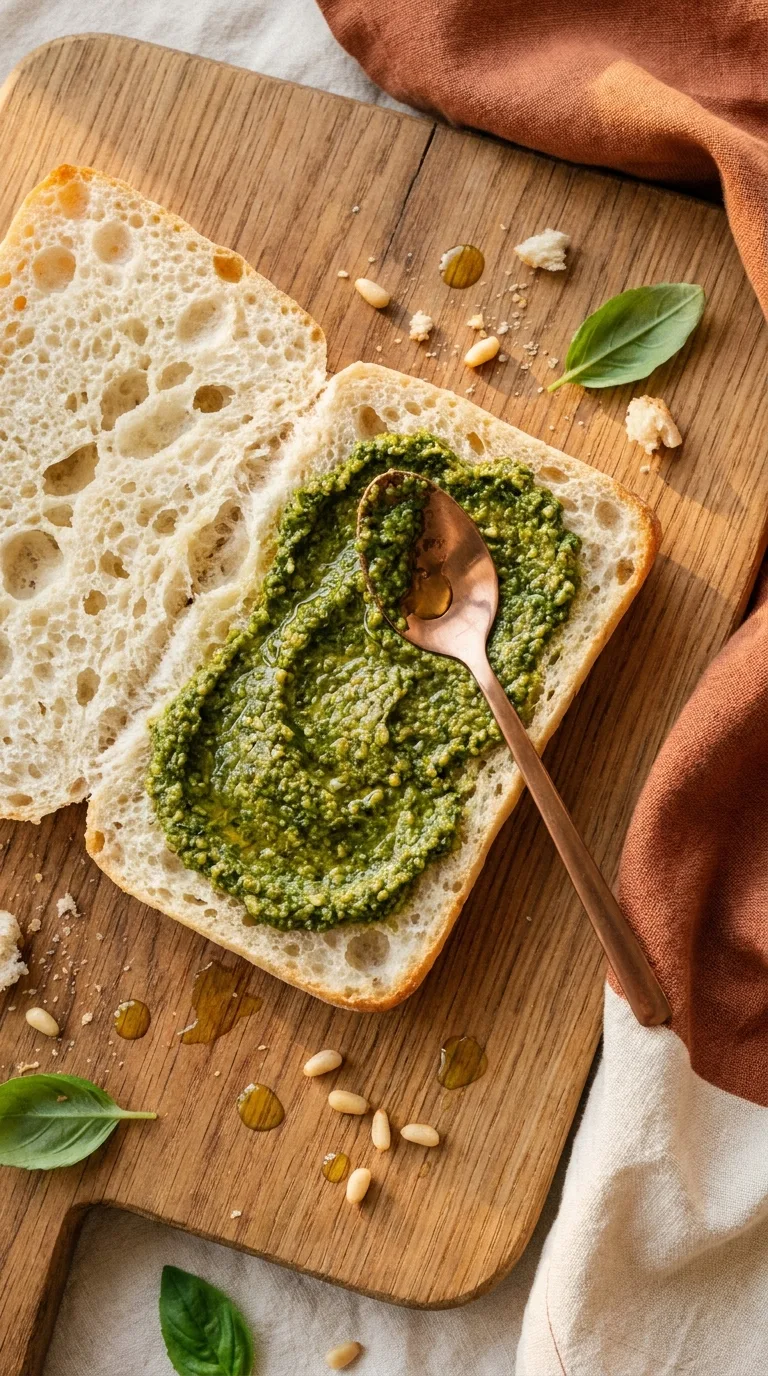
Spread the vegan pesto evenly on both inner surfaces of the bread. Use a spoon or pastry brush. A full coating ensures the herbal flavour is consistent in every bite.
-
Season the crust
Drizzle the extra-virgin olive oil over the pesto. Season with sea salt and black pepper. The oil helps the seasonings stick and aids the blistering process when heated.
-
Layer the fillings
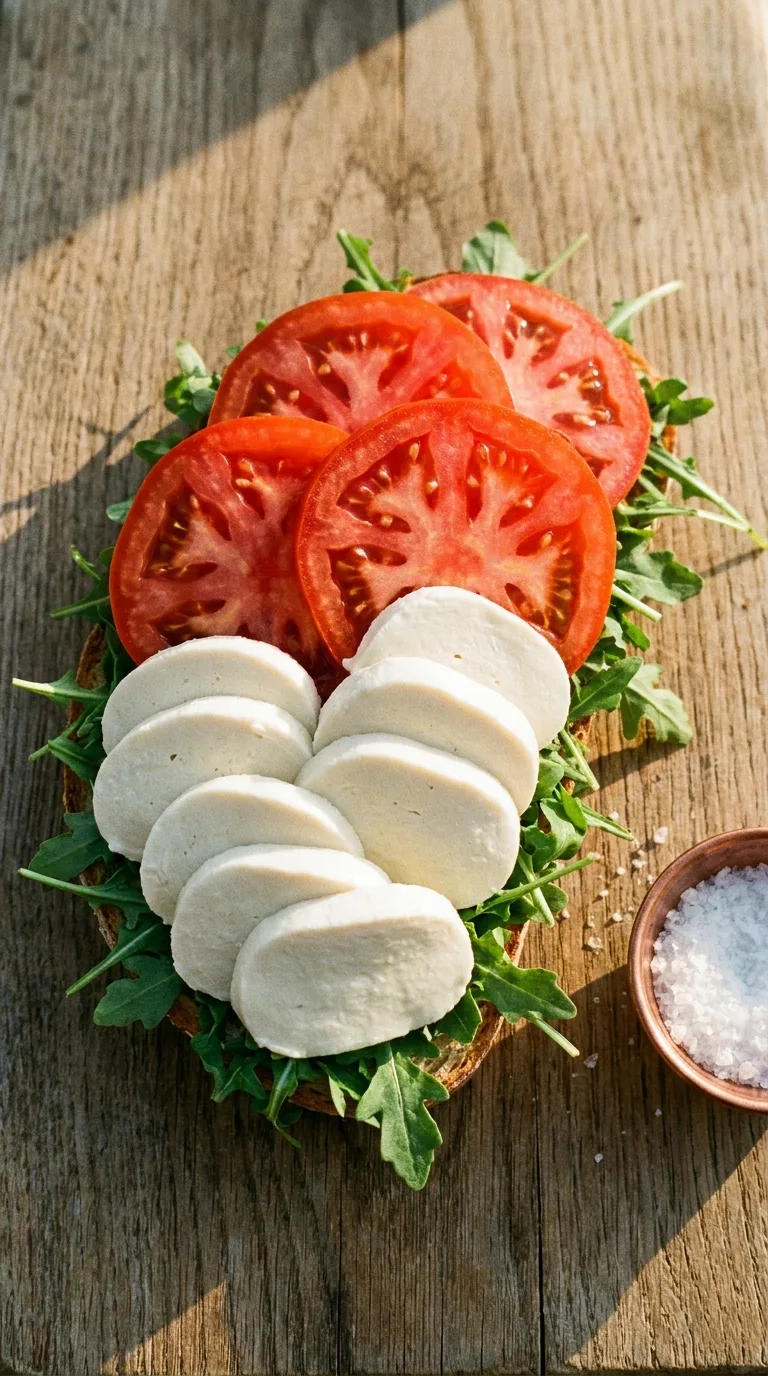
Place the arugula on the bottom half as a peppery base. Add the vegan mozzarella slices and the tomato slices. Arrange them so the tomato remains prominent.
-
Add the glaze
Drizzle the balsamic glaze over the tomato and cheese layers. Let the sweet acidity seep through. This balances the richness of the vegan cheese.
-
Grill the sandwich
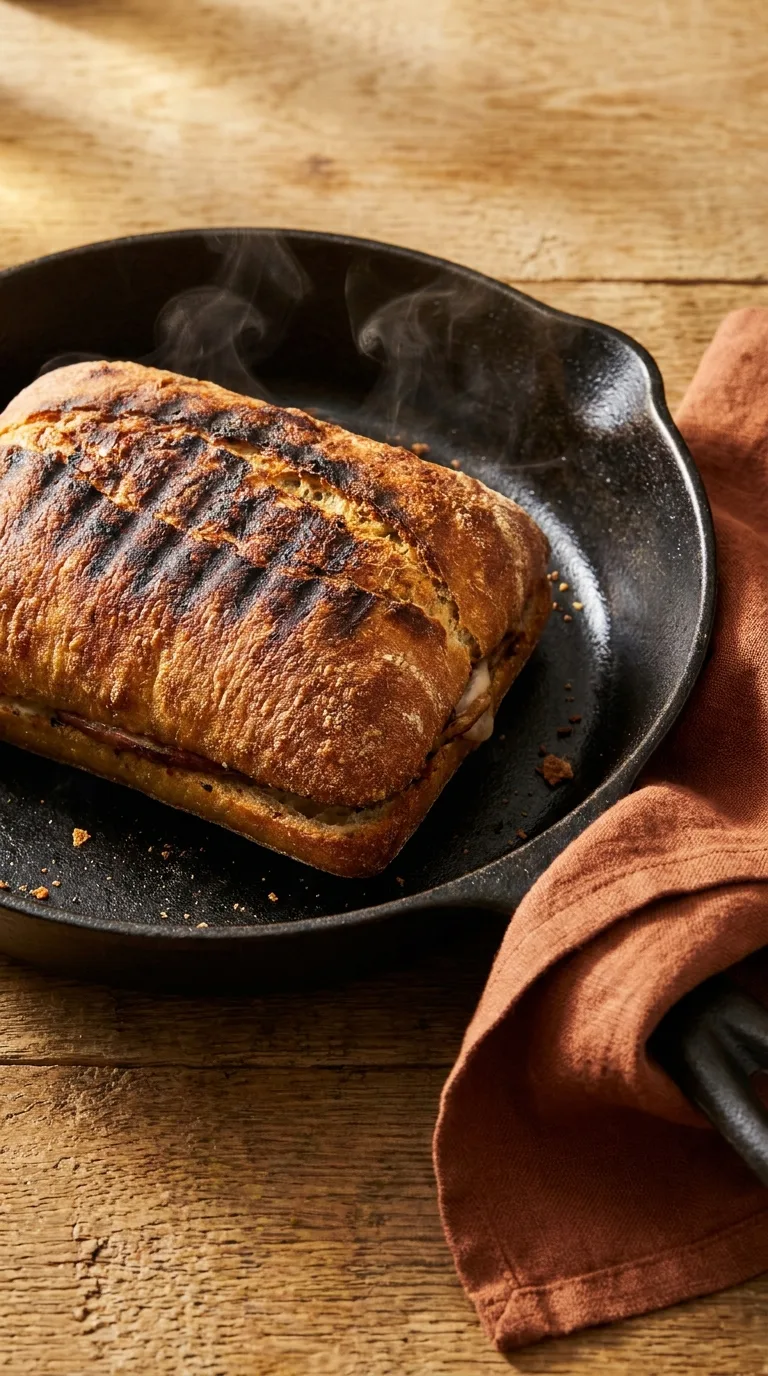
Press the top bread half onto the fillings. Grill in a heated skillet or panini press for 1–2 minutes per side. Stop when the crust is golden brown and the oil blisterises.
-
Rest and serve
Slice the sandwich into individual portions. Let it rest for 1 minute. This allows the flavours to meld before you serve it.
Under-ripe tomatoes lack the necessary sweetness and moisture for this sandwich. If your tomatoes seem firm or tasteless, roast them for 10 minutes at 190°C (375°F) before slicing. This concentrates the sugars and prevents the filling from tasting raw or acidic.
What to serve with it
Pair this sandwich with crispy sweet-potato chips to provide a sweet-savoury contrast and extra crunch. For a more comforting meal, serve it alongside a light tomato-basil soup. To present the dish, place it on a wooden board and finish with a drizzle of extra-virgin olive oil and fresh peppercorns.
Storing and reheating
Keep the sandwich in a tightly sealed foil wrapper in the refrigerator and consume it within 48 hours to maintain the best flavour. Do not keep it at room temperature for longer than 2 hours. If you need to reheat, use a skillet for a quick warm-up to crisp the bread.
Getting the texture right
Use a panini press to achieve a crisp exterior and warm interior without over-toasting the tomato. If your tomatoes lack ripeness, roast them for 10 minutes at 190°C (375°F) to concentrate their natural sweetness. This ensures the filling remains succulent while the ciabatta provides a sturdy, golden crust.
Making it ahead
You can assemble the sandwich and store it in the fridge, but avoid freezing it for optimal taste. If you must freeze, wrap it tightly in foil for up to 48 hours. Thaw the sandwich completely before reheating in a skillet to restore the texture of the bread.
Nutrition per serving
- Calories
- 720
- Protein
- 22.5 g
- Carbs
- 64.0 g
- Fat
- 38.0 g
- Fiber
- 7.5 g
- Sugar
- 12.0 g
Estimated, and offered as a guide rather than a medical figure.
Made it? Rate it.
Questions people ask
Are caprese vegan?
No, traditional caprese is not vegan because it uses fresh buffalo mozzarella. This version replaces dairy cheese with a plant-based mozzarella to make the dish suitable for a vegan diet while keeping the creamy texture.
What is typically on a caprese sandwich?
A caprese sandwich typically contains sliced tomatoes, fresh mozzarella cheese, and basil. These ingredients reflect the colours of the Italian flag and are often finished with olive oil and a balsamic glaze for acidity.
What is a vegan substitute for mozzarella cheese?
Use a plant-based mozzarella made from cashew or coconut oil, such as Miyoko's. These alternatives provide the necessary creaminess and a similar melt to dairy mozzarella when grilled in a pan or press.