Tuna Melt Panini: Pressed Sourdough with Cheddar
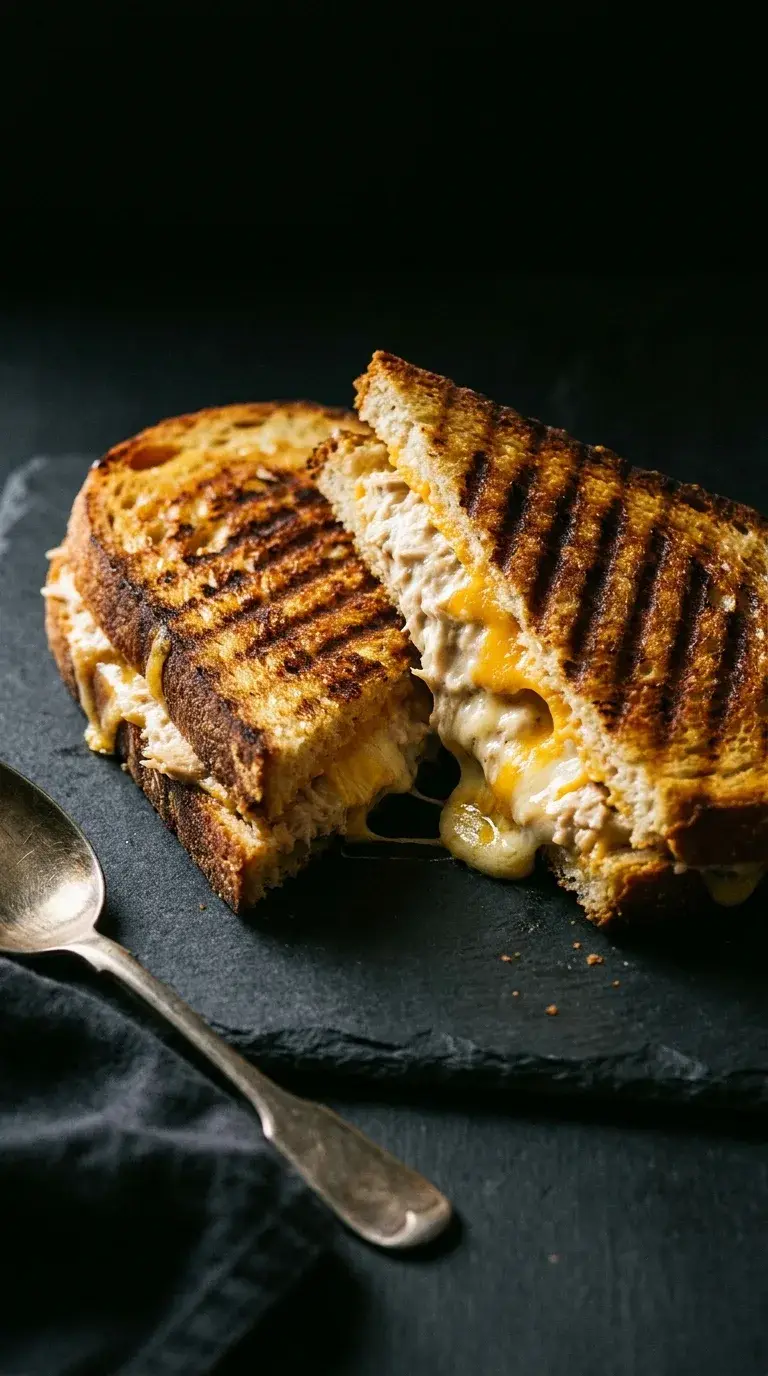
Traditional tuna melts are often baked in an open-faced style under a grill. This tuna melt panini uses a press or heavy skillet instead. Pressing the sandwich ensures that the heat penetrates the sourdough quickly and evenly. You gain a crispier exterior and a more compact structure than a standard melt provides. This method reduces the total time to 16 minutes while maintaining the classic combination of fish and melted cheese.
You will produce a sandwich with a golden brown colour and a firm texture. Pat the tuna dry after draining it in a colander to prevent the bread from becoming soggy. This one step ensures the filling remains creamy rather than watery. Brush the outer surfaces of the bread with olive oil and heat to 200°C (400°F). Let the sandwich rest for one minute after cooking to allow the cheese to set slightly before you cut it.
Tuna Melt Panini: Pressed Sourdough with Cheddar
Recipe cardIngredients
Watch how it's made
Instructions
-
Prepare the equipment
Preheat your panini press or a heavy skillet to 200°C (400°F). Ensure the surface is fully heated before adding the bread to achieve an immediate sear.
-
Drain the tuna
Open the tin of tuna and shake off as much oil as possible into a colander. Pat the tuna dry with a kitchen towel so the filling does not make the bread soggy.
-
Mix the filling
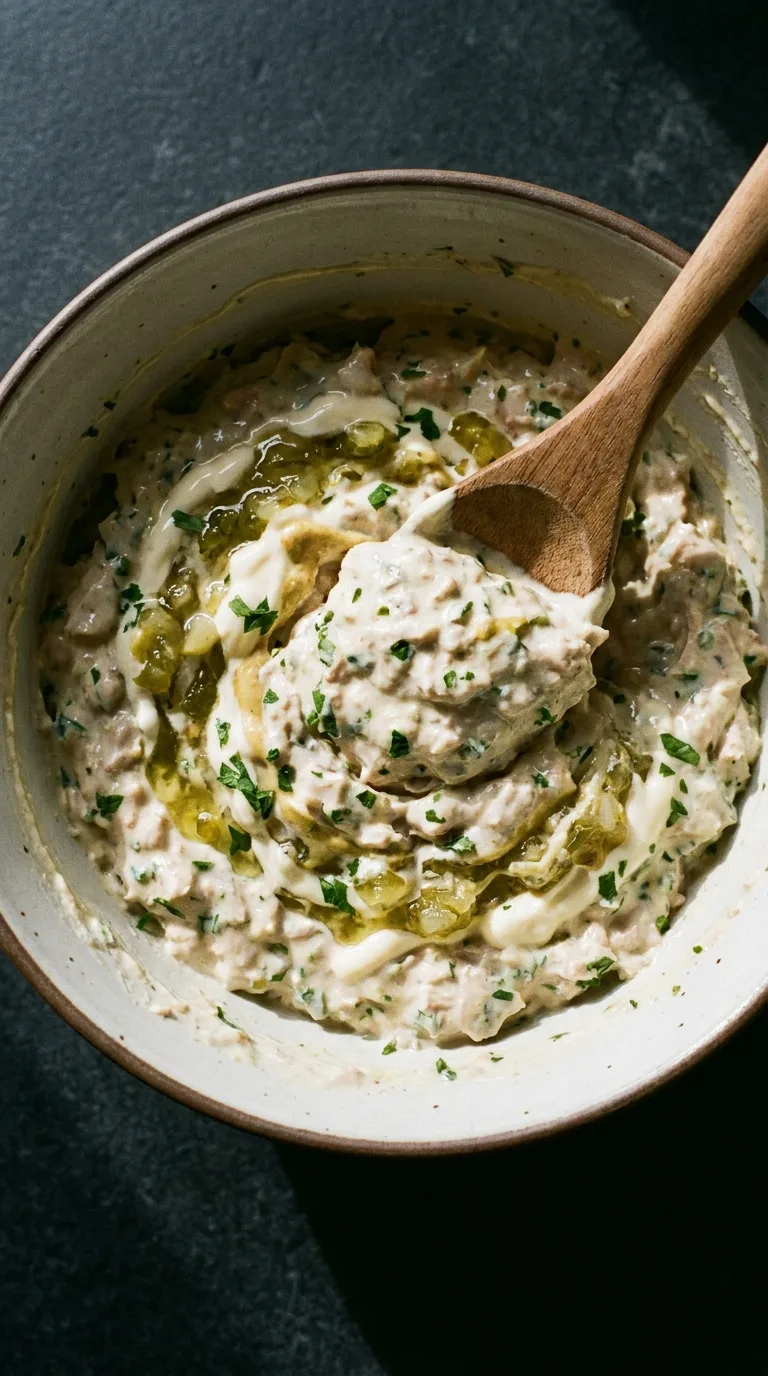
Combine the tuna, mayonnaise, Dijon mustard, dill pickle relish, chopped parsley, salt, pepper, and lemon juice in a bowl. Mix gently with a spoon until the ingredients are well incorporated.
-
Oil the bread
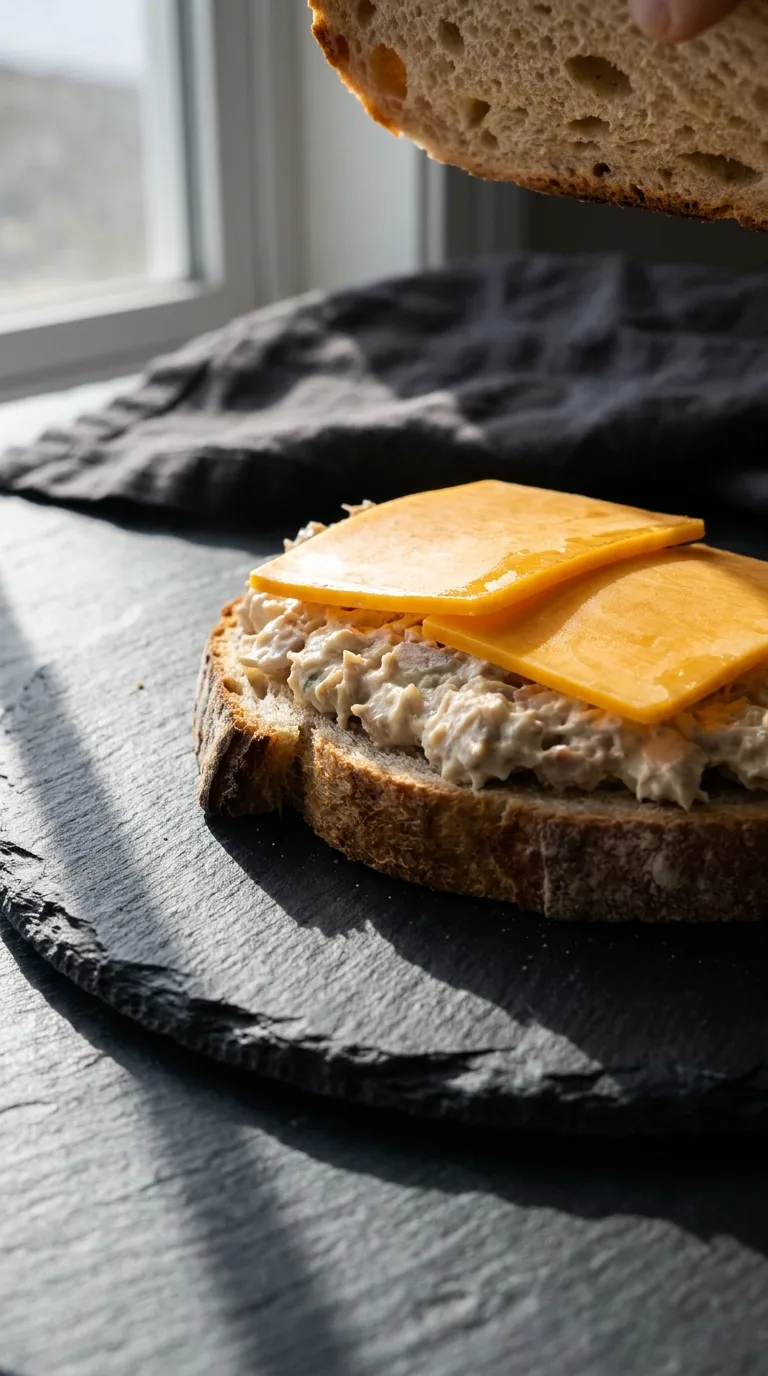
Brush 15 ml of olive oil onto the outer surfaces of both sourdough slices. This oil creates a golden brown colour and prevents the bread from sticking to the press.
-
Assemble the panini
Spread the tuna mixture evenly over one slice of bread. Place the cheddar slices on top and close the sandwich with the second slice, oiled side up.
-
Press and cook
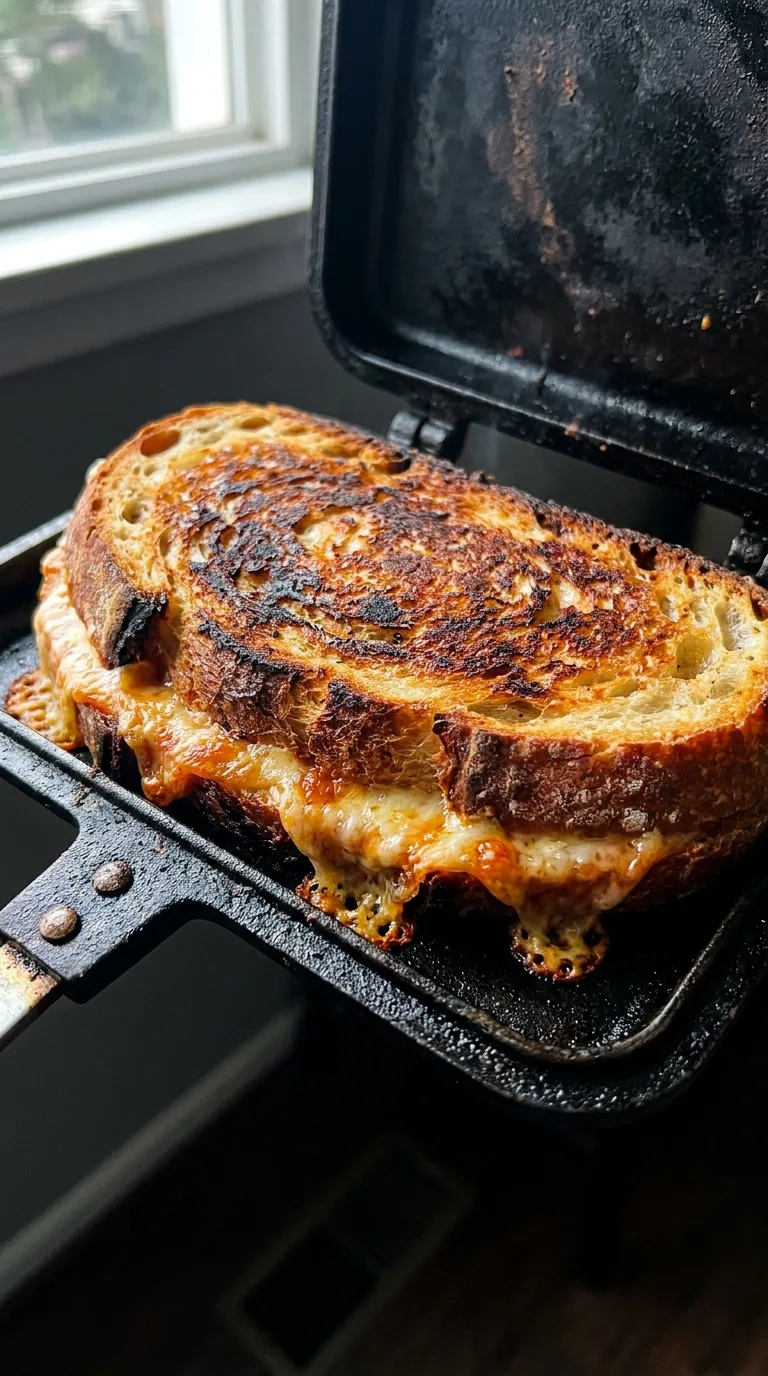
Slide the sandwich into the press and close the lid. If using a skillet, press down with a floured spatula to ensure even contact. Cook for 4–5 minutes until the bread is golden brown and the cheese has melted.
-
Rest and serve
Remove the sandwich with tongs and let it rest for one minute. This allows the melted cheese to set slightly so the filling does not slide out when you cut it diagonally.
Avoid soggy bread by brushing a thin layer of olive oil on the outer surfaces and baking the sandwich for one minute before adding the tuna and cheese. If the bread looks pale but the cheese is not yet melted, lower the heat slightly to ensure an even cook.
How it differs from the traditional method
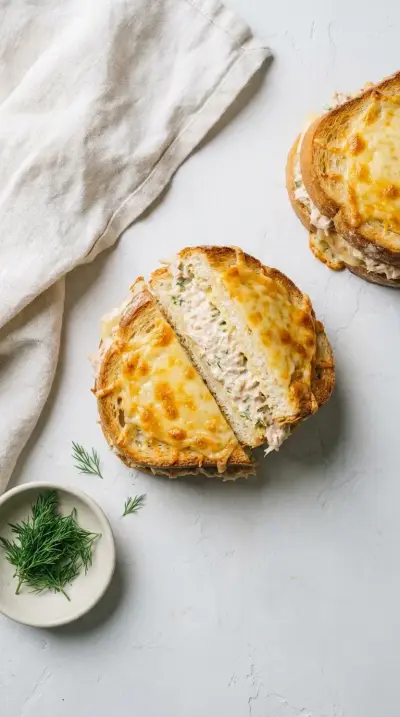
Pressing the sandwich at 200°C (400°F) creates a denser, crisper crust than an open-faced bake. The pressure ensures the cheddar bonds directly to the tuna mixture. Use a traditional oven if you prefer a softer bread texture or wish to avoid the compression of a press.
Storing and reheating
Keep leftover sandwiches in an airtight container at room temperature for up to 2 hours. For long term storage, wrap them in cling film and freeze for 1 month. Reheat in a pre-heated oven at 180°C (350°F) for 10 minutes to restore the crispness of the sourdough.
Nutrition per serving
- Calories
- 410
- Protein
- 20.0 g
- Carbs
- 35.0 g
- Fat
- 30.0 g
- Fiber
- 3.2 g
- Sugar
- 4.5 g
Estimated, and offered as a guide rather than a medical figure.
Made it? Rate it.
Questions people ask
What goes in a tuna melt?
This version uses drained tuna, mayonnaise, Dijon mustard, dill pickle relish, and fresh parsley. Sharp cheddar cheese provides the melt, while sourdough bread adds a tangy base. These ingredients balance the richness of the fish with acidity and salt.
Which cheese goes best with tuna melt?
Sharp cheddar is the standard for a bold flavour. You may swap it for mozzarella or provolone if you prefer a milder taste, or Muenster for a creamier consistency that melts quickly under the pressure of a panini press.
Can I make a tuna melt in a panini press?
Yes. A panini press provides even heat and pressure, which caramelises the oiled sourdough and melts the cheese efficiently. If you lack a press, use a heavy skillet and press down with a spatula to achieve the same result.