Traditional Holiday Shortbread: Buttery Festive Cookies
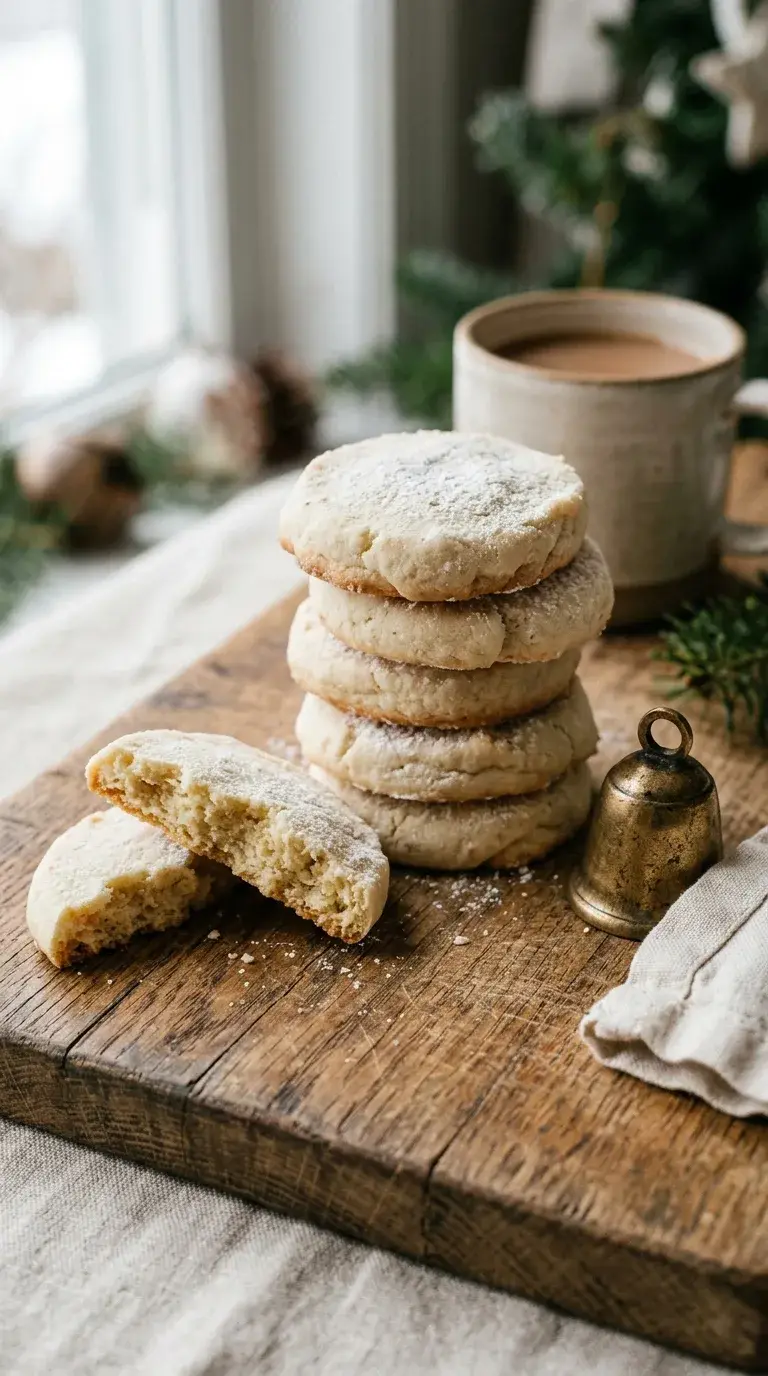
This traditional holiday shortbread is a staple of American festive baking. It is a dense, buttery cookie with a fine crumb that melts on the tongue. You achieve a pale colour and a rich, sweet flavour by using sifted confectioners’ sugar and unsalted butter. These cookies are designed to be tender rather than crisp, making them a heavy, satisfying treat for gatherings.
Control your mixing to ensure the correct texture. Sift the flour to remove lumps, then beat the mixture on low speed only until the dough comes together. Do not overwork the dough after adding the flour, or the cookies will become tough instead of tender. If the dough feels too soft, chill it for 30 minutes before rolling to ensure a cleaner cut and a stable shape during the 12–15 minutes in the oven.
Traditional Holiday Shortbread: Buttery Festive Cookies
Recipe cardIngredients
Watch how it's made
Instructions
-
Prepare the oven
Preheat your oven to 175 °C (350 °F). Line a baking sheet with parchment paper or a silicone mat to prevent the butter from sticking to the pan.
-
Cream butter and sugar
Use an electric mixer on medium speed to cream the softened butter and confectioners’ sugar. Beat for 3–4 minutes until the mixture is light, fluffy, and pale in colour. This aeration ensures the cookies have a delicate lift.
-
Add flavouring
Mix in the vanilla extract and salt. Blend only until incorporated so the salt is evenly distributed without overworking the fats.
-
Incorporate the flour
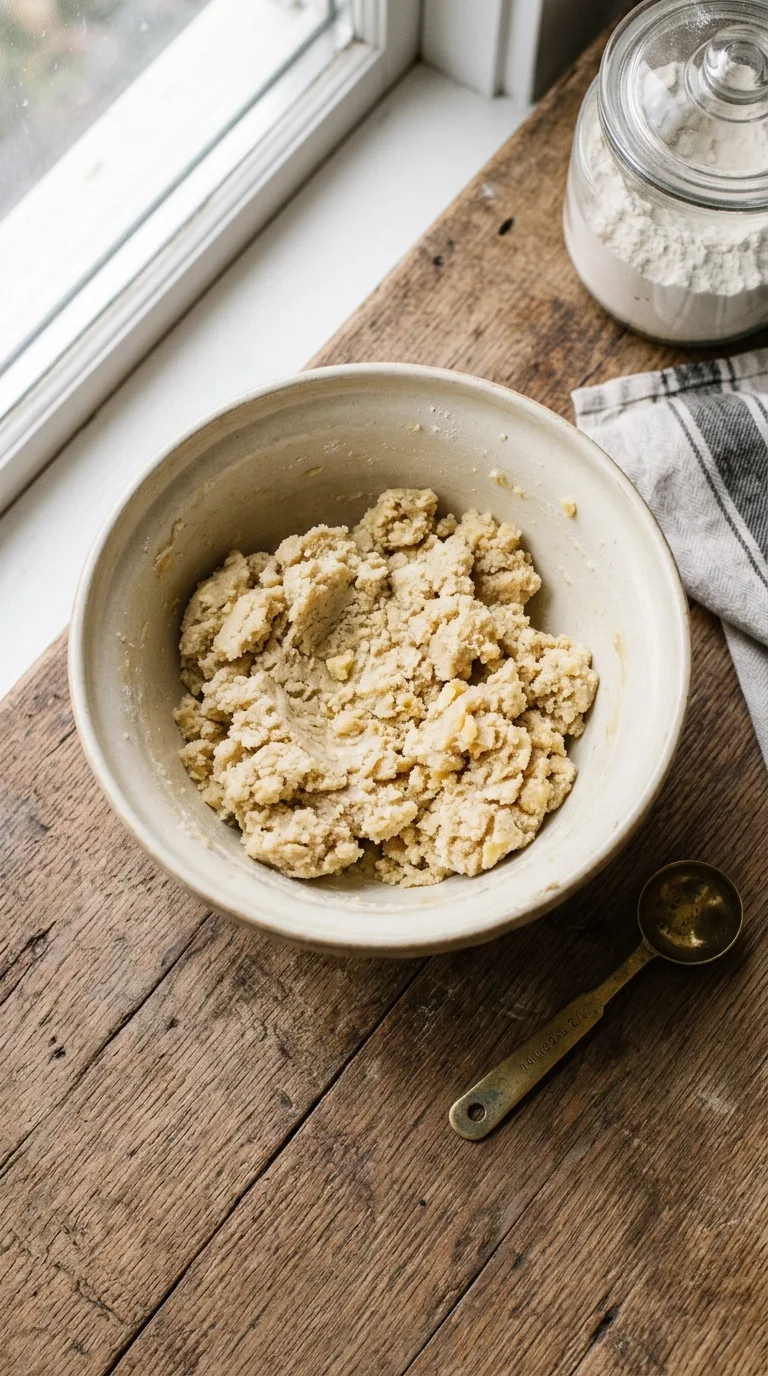
Gradually sift in the all‑purpose flour while beating on low speed. Mix for about 2 minutes until the dough just starts to clump. Stop once the clumps no longer pull apart easily to maintain tenderness.
-
Shape the cookies
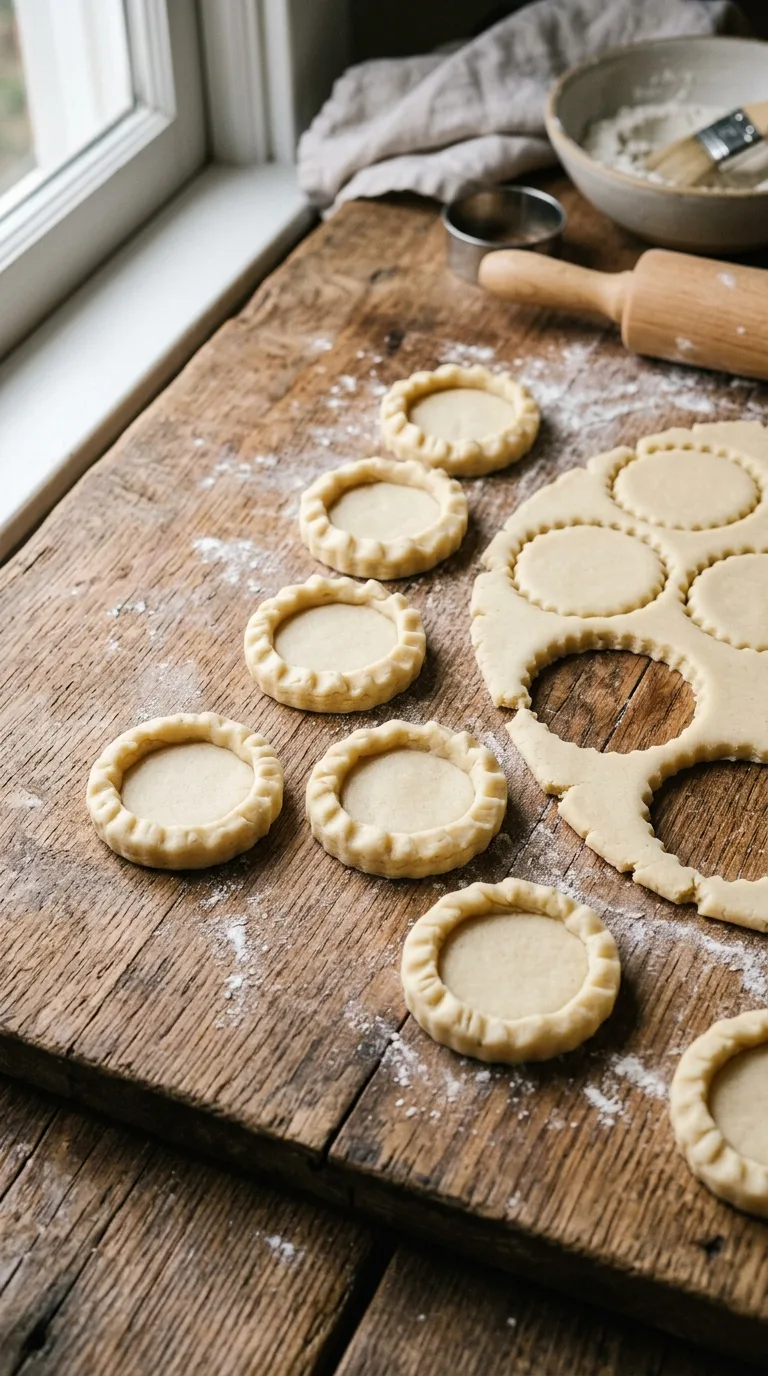
Roll the dough on a floured surface to a thickness of 2 cm (3/4 inch). Cut into circles or squares and pinch the edges to create a raised rim. This rim is the signature look of traditional shortbread.
-
Bake the shortbread
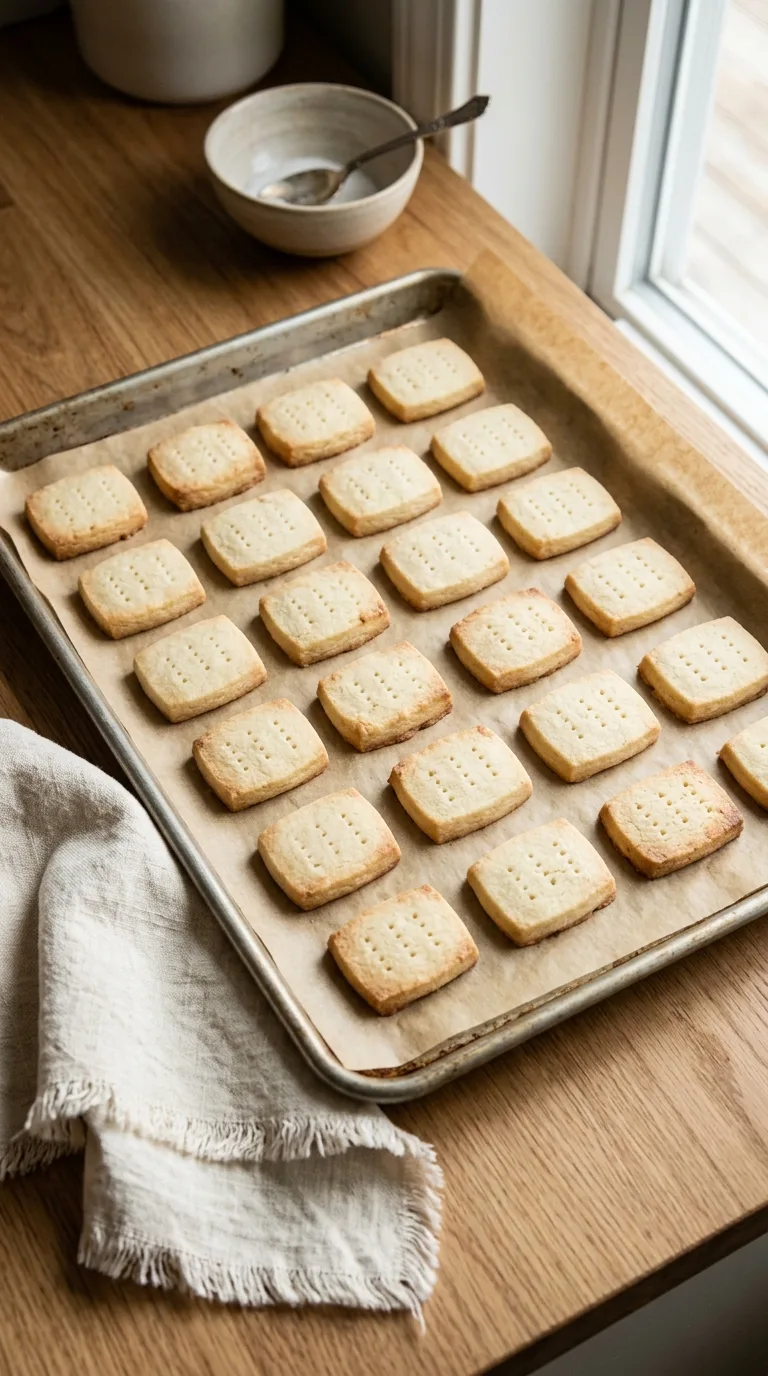
Place cookies 2 cm (1 inch) apart on the sheet to allow for slight expansion. Bake for 12–15 minutes until edges are very light golden‑brown but centres remain pale. Rotate the sheet halfway through to avoid hot spots.
-
Cool and decorate
Let the cookies cool on the sheet for 5 minutes. Dust with powdered sugar or sprinkles while warm so they adhere to the surface. Transfer to a wire rack to cool completely.
Do not overmix the dough after adding the flour. If you work the dough too much, you develop too much gluten, which makes the cookies tough. You will know it is overmixed if the dough becomes elastic rather than crumbly and tender.
What to serve with it
Pair these cookies with a cup of spiced apple cider or mulled tea. You can also arrange them on a platter with fresh citrus slices and honey. For a contrast in flavour, serve them alongside a savoury cheese board to balance the buttery sweetness with tangy cheeses.
Storing and reheating
Keep the cookies in an airtight container at room temperature for up to 1 week to maintain their crisp texture. For longer storage, wrap them individually in plastic wrap or parchment and freeze in a freezer-safe bag for 2 months. Thaw at room temperature before you serve them.
Nutrition per serving
- Calories
- 165
- Protein
- 2.1 g
- Carbs
- 18.2 g
- Fat
- 9.8 g
- Fiber
- 0.4 g
- Sugar
- 7.1 g
Estimated, and offered as a guide rather than a medical figure.
Made it? Rate it.
Questions people ask
What is the original shortbread?
Original shortbread is a traditional Scottish biscuit. It relies on a high proportion of butter to flour without using leavening agents, which creates its characteristic dense, crumbly texture and rich buttery flavour.
What is the 3:2:1 rule for shortbread?
The 3:2:1 rule refers to the ratio of ingredients by weight. It consists of three parts flour, two parts butter, and one part sugar, ensuring the dough has the correct structure and richness.
What's the difference between Scottish shortbread and regular shortbread?
Scottish shortbread traditionally uses only butter, sugar, and flour. Regular shortbread variations often incorporate additional leavening agents, extracts, or cornstarch to alter the density and achieve a lighter, more airy crumb.