Simple Roast Chicken: Lemon and Garlic Whole Bird
Many cooks fail to dry the skin before seasoning their simple roast chicken. This leaves moisture on the surface, which creates a steamed, pale skin rather than a crisp, golden brown exterior.
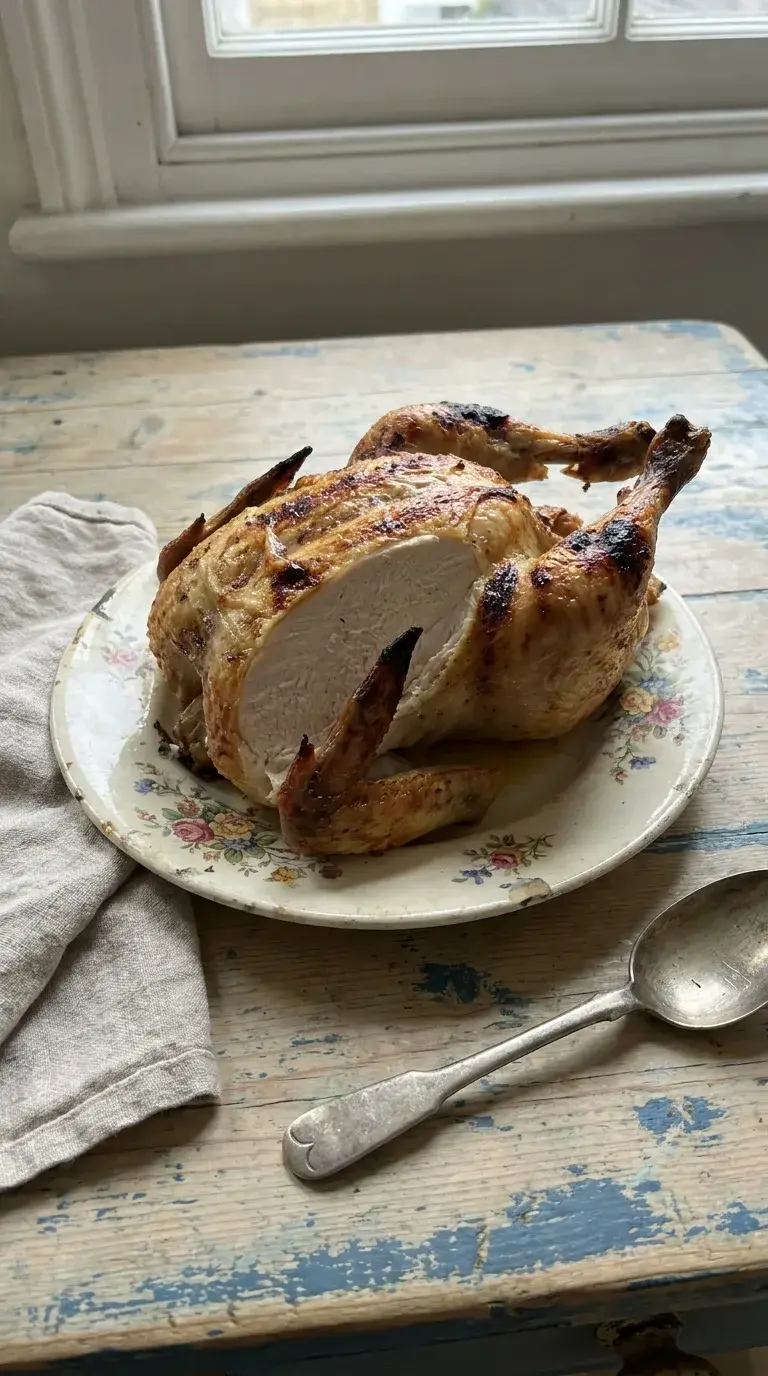
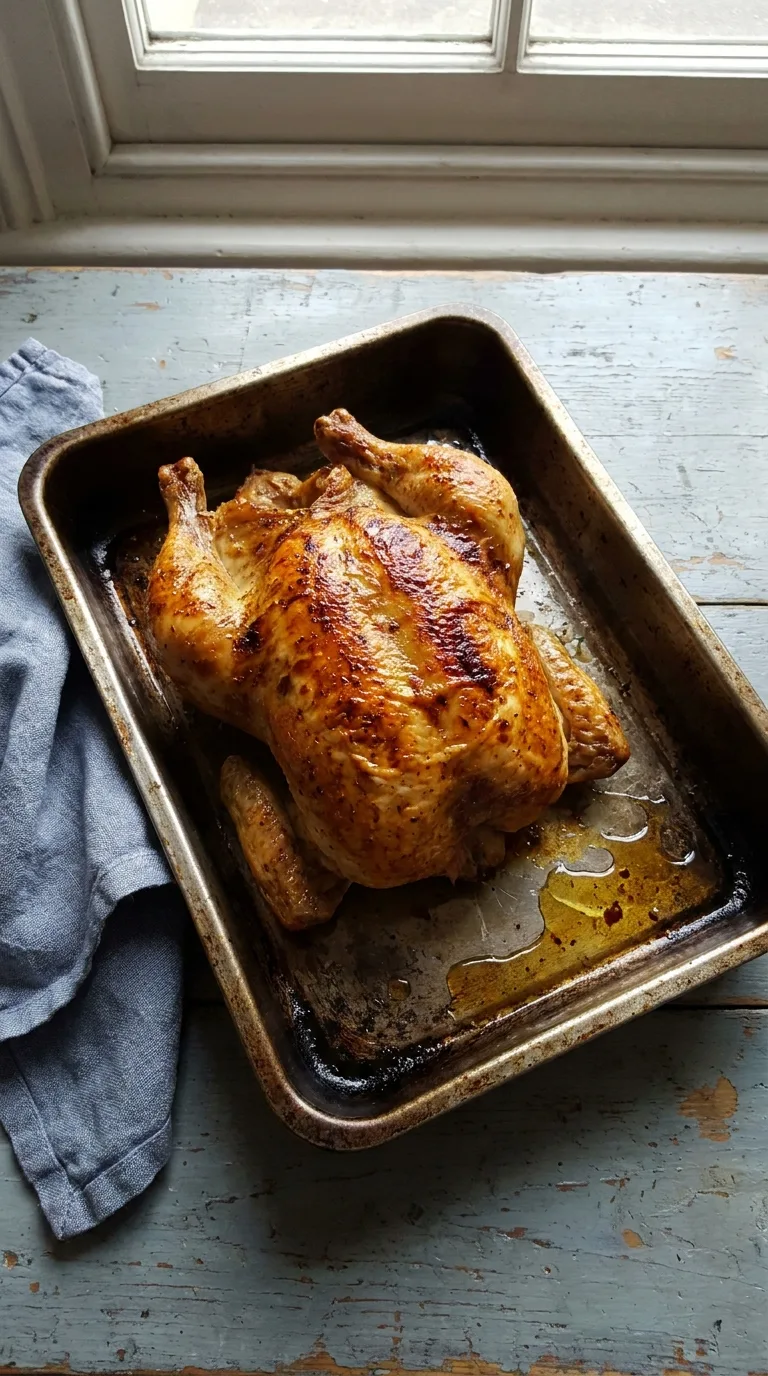
This dish is a whole 1.9 kg chicken roasted at 200°C (400°F) with lemon, smashed garlic, and fresh thyme. When prepared correctly, the meat remains juicy and the skin develops a savoury, deep colour.
Pat the chicken dry with paper towels to promote crisp skin. Use a meat thermometer to ensure the thickest part of the thigh reaches 74°C (165°F), then allow the bird to rest for 15 minutes so the juices redistribute through the meat.
Simple Roast Chicken: Lemon and Garlic Whole Bird
Recipe cardIngredients
Watch how it's made
Instructions
-
Prepare the oven
Preheat your oven to 200°C (400°F). Ensure the oven fully reaches this temperature before you slide the pan inside to ensure immediate searing.
-
Dry the chicken
Pat the chicken dry with paper towels on a clean work surface. You must remove surface moisture to promote crisp skin during roasting.
-
Mix the seasoning
Combine the olive oil, kosher salt, and freshly ground black pepper in a small bowl. Rub this mixture evenly over the skin and inside the cavity for consistent flavour.
-
Stuff and truss
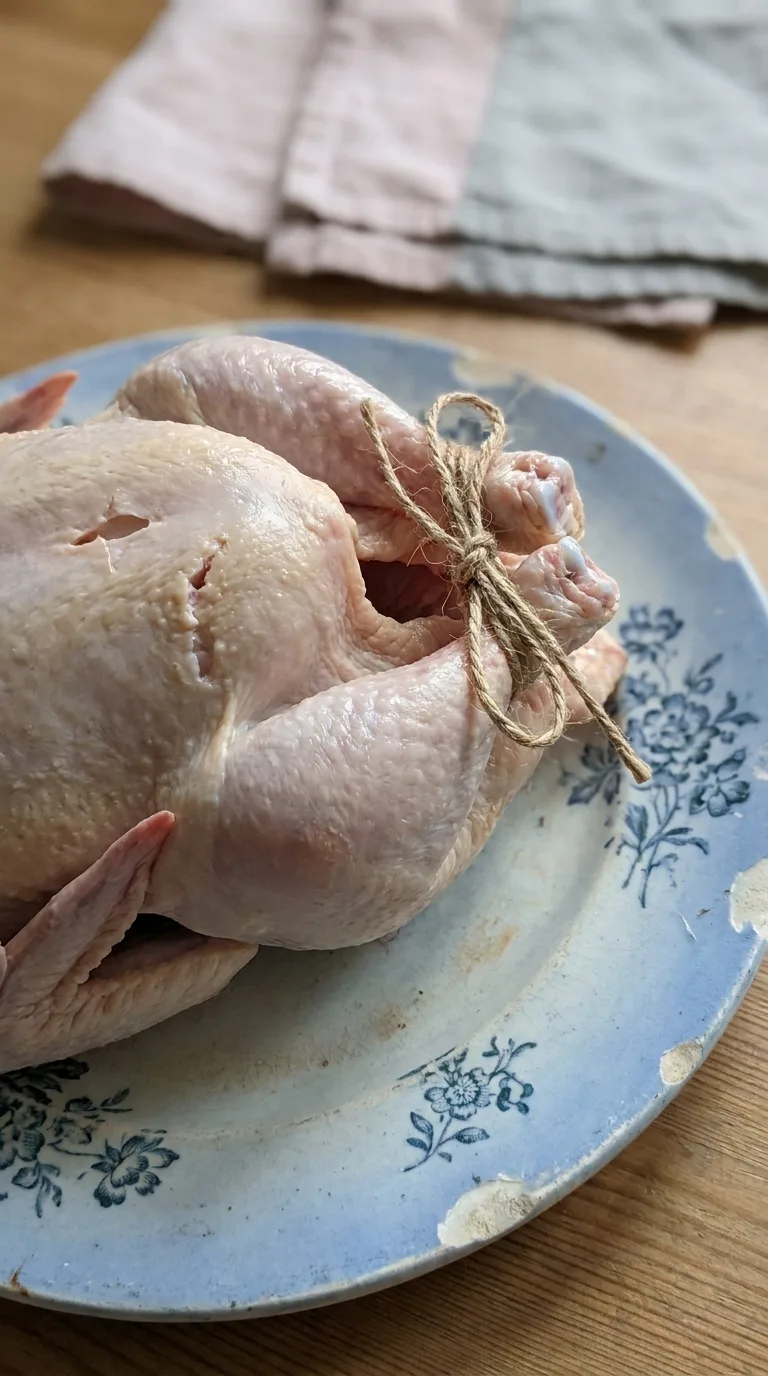
Place one lemon half, the smashed garlic, and thyme in the cavity. Tie the legs with twine and tuck the wing tips to help the chicken cook evenly.
-
Roast the bird
Place the chicken breast-side up in a roasting pan. Roast for 60–75 minutes, basting halfway through, until a meat thermometer in the thigh reads 74°C (165°F).
-
Rest the meat
Remove the chicken and tent it loosely with aluminium foil. Let it rest for 15 minutes so the juices redistribute, which prevents the meat from drying out when you carve.
Avoid relying on the colour of the skin to judge doneness, as it can brown before the inside is safe. Use a meat thermometer in the thickest part of the thigh. If the skin browns too quickly, cover the breast with foil to prevent burning while the centre finishes.
What goes wrong and why
Dry meat occurs when you roast the chicken too long or fail to let it rest. You will spot this if the juices run clear immediately after carving. Rest the bird for 15 minutes to allow fibres to relax and reabsorb moisture for a juicier result.
What to serve with it
Pair this roast with root vegetables like carrots, parsnips, and potatoes tossed in olive oil. Use herbed quinoa or couscous to soak up the pan juices. A side salad of mixed greens dressed with lemon vinaigrette adds a sharp contrast to the rich, savoury meat.
Storing and reheating
Cool the chicken to room temperature for 20 to 30 minutes before placing in an airtight container. Keep refrigerated portions for up to 2 days. For longer storage, flash-freeze pieces on a baking sheet before transferring them to a freezer-proof bag for up to 3 months.
Nutrition per serving
- Calories
- 580
- Protein
- 42.5 g
- Carbs
- 3.2 g
- Fat
- 41.1 g
- Fiber
- 0.8 g
- Sugar
- 1.4 g
Estimated, and offered as a guide rather than a medical figure.
Made it? Rate it.
Questions people ask
Is it better to roast chicken at 350 or 400?
Use 200°C (400°F) for this recipe. A higher temperature caramelises the skin more effectively and ensures a crisp texture while keeping the inside juicy, provided you use a meat thermometer to monitor the internal temperature.
Is it better to cook a whole chicken covered or uncovered?
Cook the chicken uncovered. Leaving the bird exposed to the dry heat of the oven allows the skin to brown and crisp. Covering it would steam the meat, resulting in pale, soft skin.
How to make a simple roast chicken?
Pat the skin dry and rub with an oil and salt mixture. Stuff the cavity with lemon, garlic, and thyme. Roast at 200°C (400°F) until the internal temperature reaches 74°C (165°F) and let it rest.