Old Fashioned Roast Chicken: Classic Oven-Roasted Poultry
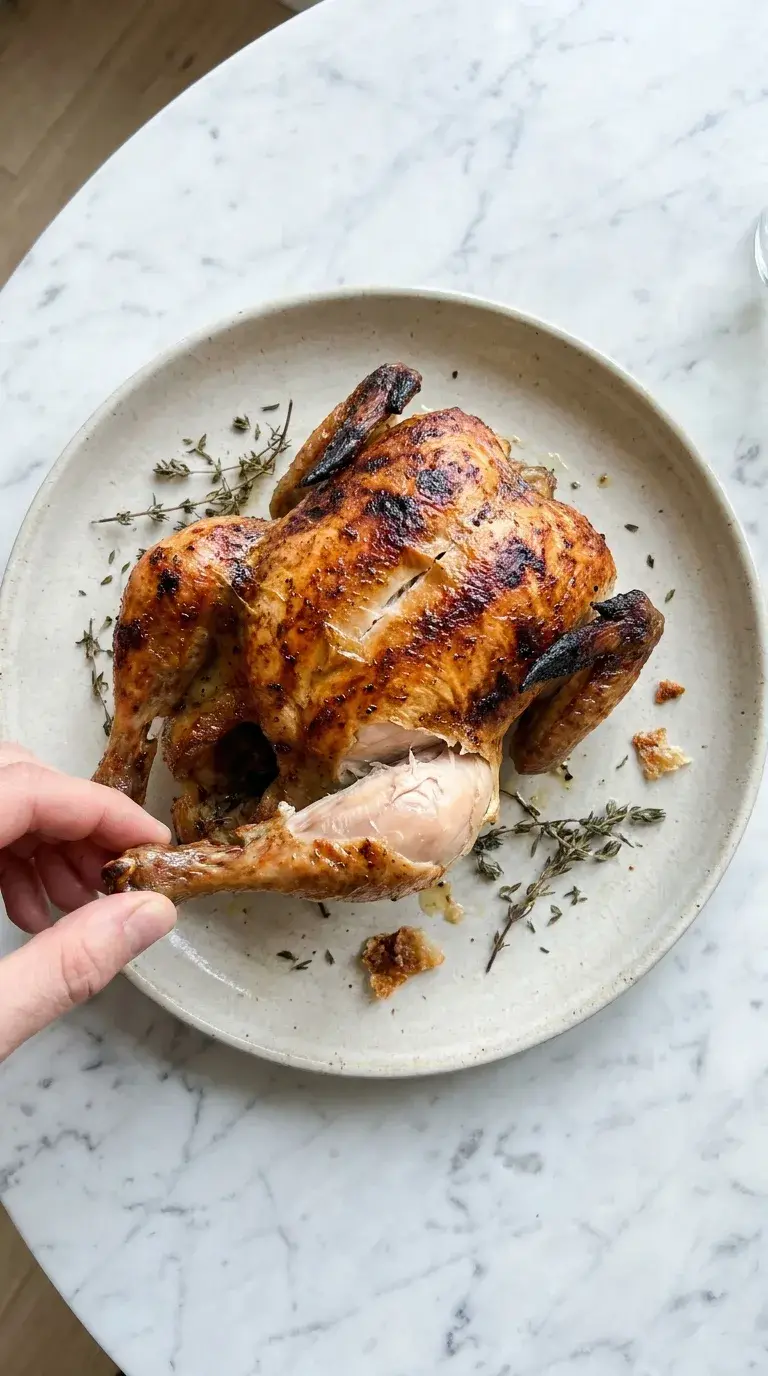
Select a whole chicken weighing 1800 g for a consistent result. Look for a bird with plump breasts and clear skin, avoiding any with bruising or a grey tint. Pat the skin completely dry with paper towels before you begin your old fashioned roast chicken. This removes surface moisture so the skin can caramelise and crisp instead of steaming in the oven.
You will produce a savoury roast with a golden-brown finish. Use a roasting rack to ensure hot air circulates around the bird, which prevents a soggy bottom. You must let the meat rest for 15 minutes after roasting. This allows the juices to redistribute throughout the meat, ensuring the breast remains moist. The final result is a comforting dinner that takes 1 hour 55 minutes from preparation to the table.
Old Fashioned Roast Chicken: Classic Oven-Roasted Poultry
Recipe cardIngredients
Instructions
-
Prepare the Bird
Preheat your oven to 175°C (350°F). Pat the chicken dry with paper towels. Removing surface moisture ensures the skin crisps rather than steams.
-
Season the Skin
Mix the salt, pepper and thyme in a small bowl. Rub this mixture over the skin and inside the cavity. Seasoning early allows the flavour to penetrate the meat.
-
Stuff and Coat
Place the garlic cloves and lemon halves inside the cavity. Brush the bird with softened butter and drizzle with olive oil. The oil adds a high-heat sear for extra crispness.
-
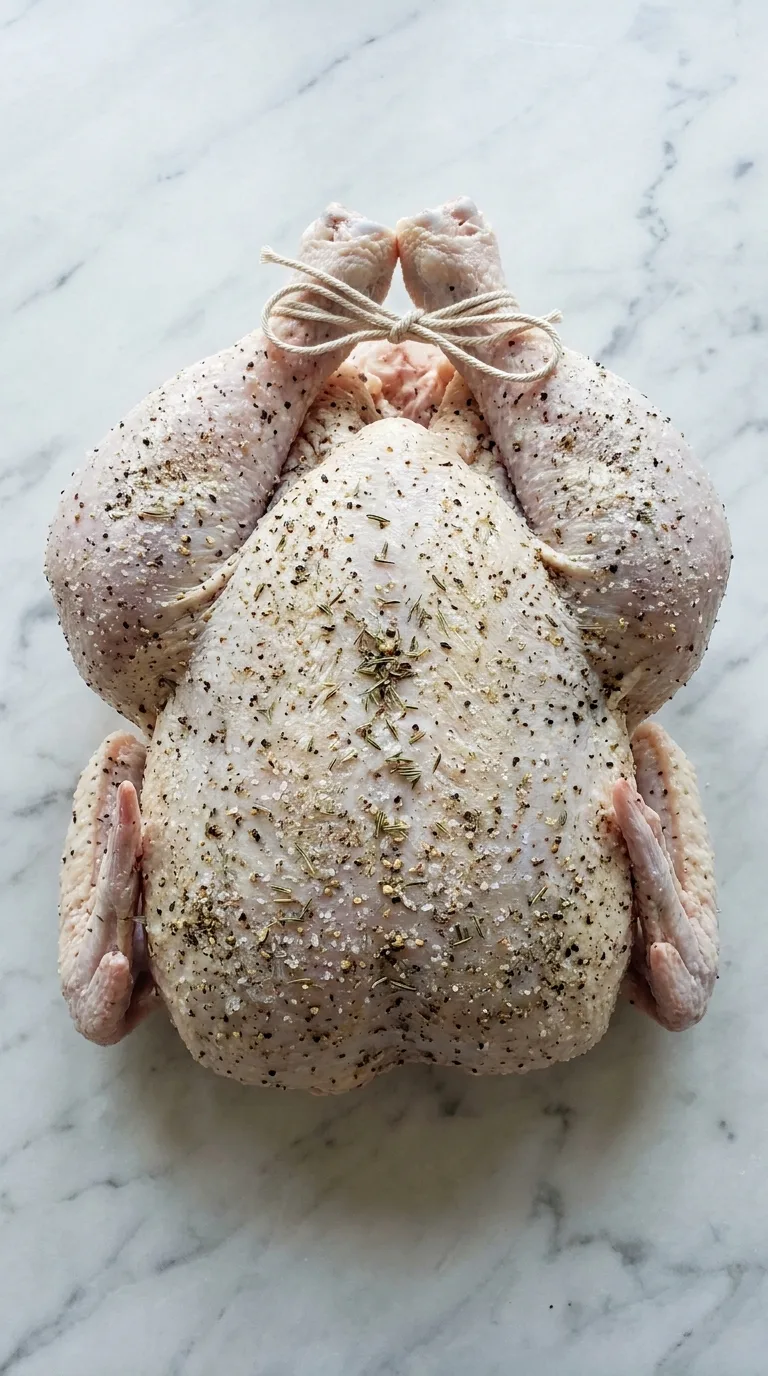
Secure the Legs
Tie the legs together with kitchen twine and tuck the wing tips under the body. This prevents the extremities from burning and ensures the breast cooks evenly.
-
Roast the Chicken
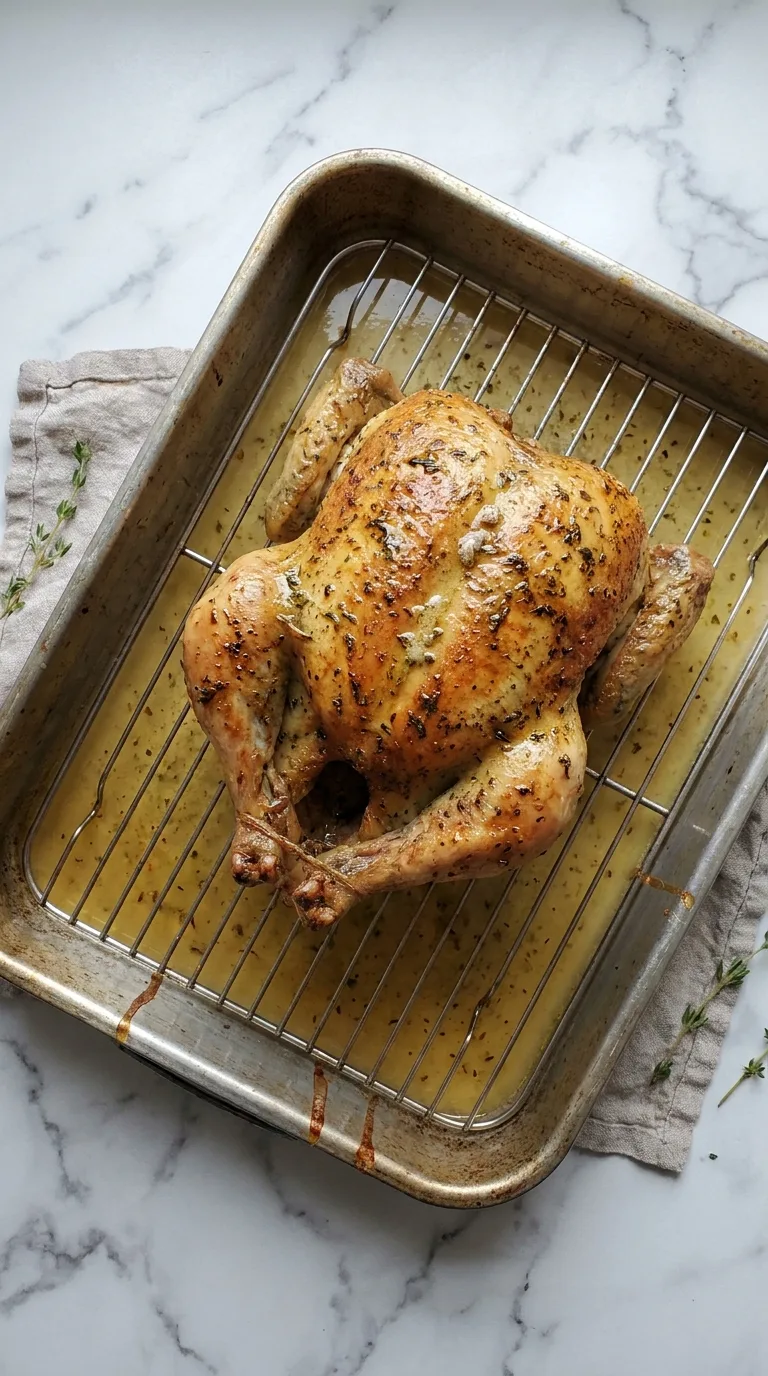
Place the chicken breast-side up on a rack in the roasting pan. Pour the apple juice into the base to keep the drippings moist. Roast for 1 hour 20 minutes, basting twice.
-
Brown the Skin
Raise the temperature to 200°C (400°F) for the final 10 minutes. This high heat caramelises the skin for a golden-brown colour.
-
Verify and Rest
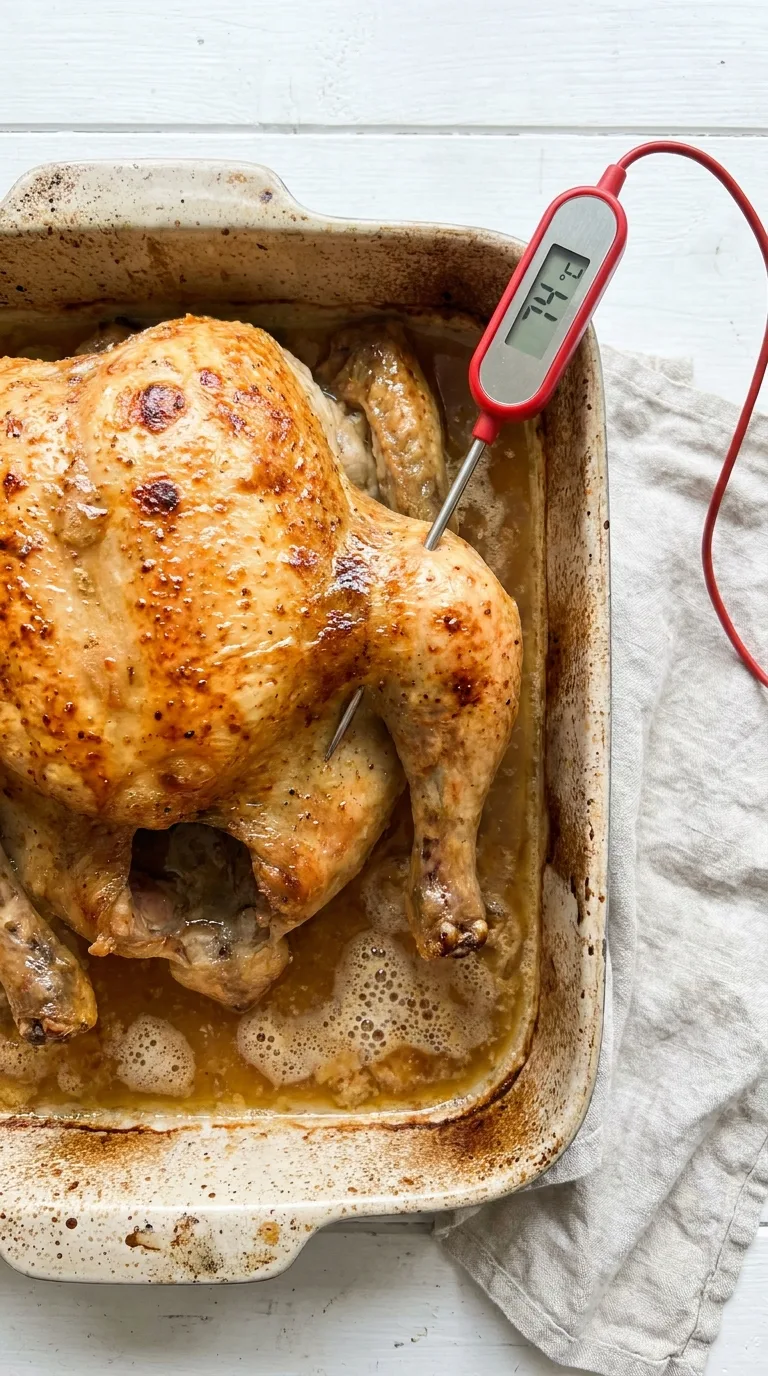
Check that the thickest part of the thigh reaches 74°C (165°F). Remove the bird and let it rest under foil for 15 minutes. This allows juices to redistribute so the meat remains moist.
Moisture is the enemy of crisp skin. Always pat the chicken dry before adding fats. Use a roasting rack to let hot air circulate under the bird; otherwise, the bottom will become soggy and the meat will steam rather than roast.
Apple juice substitutes
Use a low-sodium chicken broth if apple juice is unavailable. This change removes the subtle sweetness and fruit acidity from the pan drippings. The liquid still prevents the chicken juices from burning and keeps the meat moist during the roasting process at 175°C (350°F).
What to serve with it
Serve the chicken with golden roasted carrots and parsnips for a classic pairing. Creamy mashed potatoes or a buttery rice pilaf provide a hearty base. Finish the meal with mixed greens tossed in olive oil and apple cider vinegar to balance the richness of the butter.
Storing and reheating
Refrigerate the wrapped chicken within 2 hours of cooking. Store it in the fridge for up to 4 days. For longer storage, place the cooled meat in an airtight container and freeze for up to 4 weeks. Thaw in the refrigerator overnight before you reheat.
Nutrition per serving
- Calories
- 620
- Protein
- 48.5 g
- Carbs
- 6.2 g
- Fat
- 42.1 g
- Fiber
- 0.8 g
- Sugar
- 4.1 g
Estimated, and offered as a guide rather than a medical figure.
Made it? Rate it.
Questions people ask
What's the best seasoning for roast chicken?
Use a blend of fine sea salt, black pepper and dried thyme. Salt penetrates the meat to enhance flavour, while thyme provides an earthy aroma that complements the butter and lemon used in this old fashioned method.
What is the old fashioned way to bake chicken in the oven?
Roast the bird on a rack at 175°C (350°F) and finish at 200°C (400°F). This two-stage temperature process ensures the meat cooks through evenly before the skin is crisped to a golden-brown colour.
Is it better to roast chicken at 350 or 400?
Start at 175°C (350°F) for the bulk of the cooking to keep the meat juicy. Raise the heat to 200°C (400°F) for the final 10 minutes to caramelise the skin without overcooking the breast.