Baked Chicken Thighs Christmas: Festive Glazed Poultry
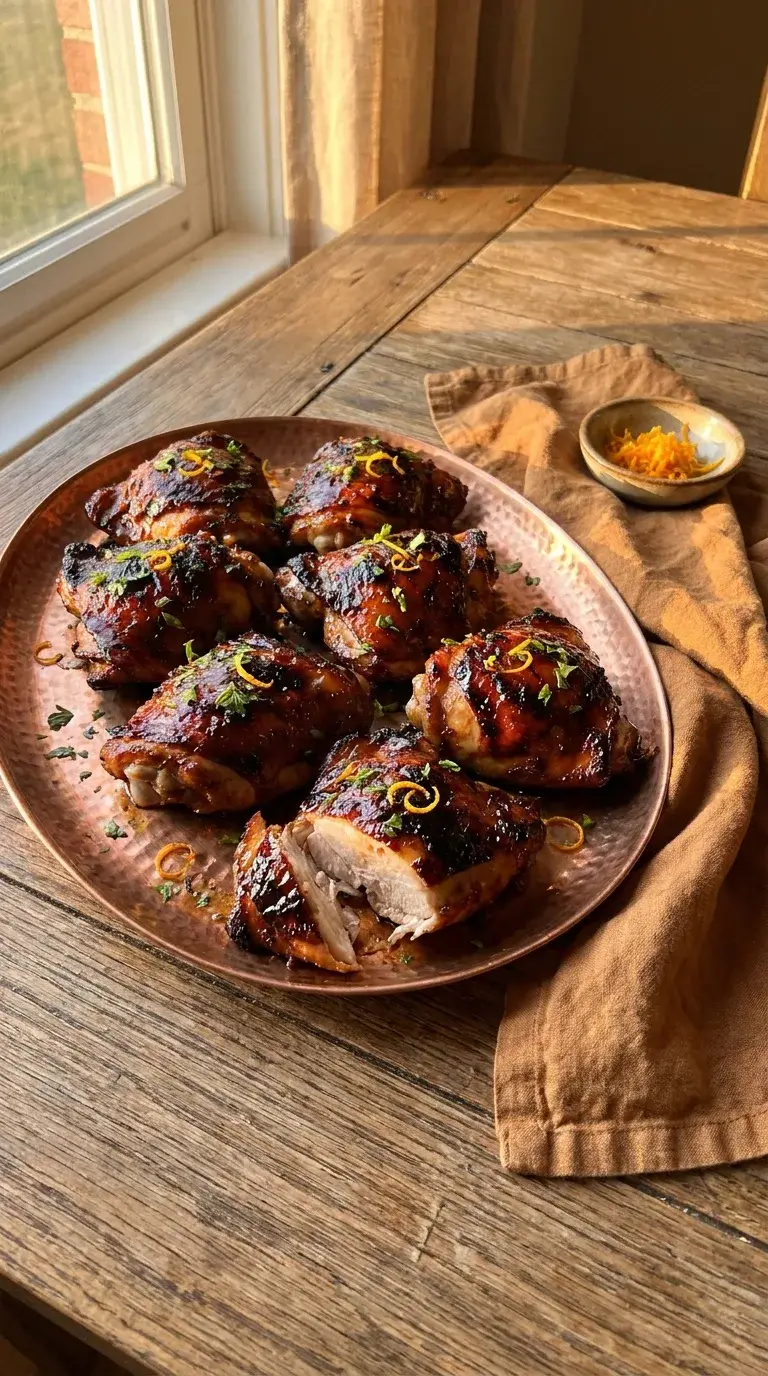
Traditional festive poultry often requires hours of roasting a whole bird to ensure the meat stays moist. This version of baked chicken thighs Christmas uses smaller cuts and a wire rack to speed up the process. You must use a rack because it allows hot air to circulate around the meat. This ensures the skin crisps evenly without needing extra oil. By preparing the thighs separately, you gain more control over the seasoning and avoid the dry breast meat common in larger roasts.
The result is a savoury balance of salt and citrus with a sticky, dark brown sugar coating. You must pat the chicken thighs dry with paper towels before adding the rub. Removing surface moisture allows the spices to adhere better and prevents the skin from steaming. This step, combined with a final rest of 10 minutes to redistribute the juices, ensures the meat remains succulent while the glaze pulls away from the bone.
Baked Chicken Thighs Christmas: Festive Glazed Poultry
Recipe cardIngredients
Watch how it's made
Instructions
-
Prepare the oven
Preheat your oven to 190°C (375°F). Place a wire rack on top of a baking tray. This allows hot air to circulate under the meat, which promotes a crisp skin without needing extra oil.
-
Dry and rest chicken
Pat the chicken thighs dry with paper towels. Leave them to rest while you prepare the glaze. Removing surface moisture ensures the seasoning adheres better and the skin browns properly.
-
Season the thighs
Whisk olive oil, salt, pepper, thyme, rosemary, cumin, paprika, garlic and parsley in a mixing bowl. Rub this mixture over the thighs, skin side up. Arrange them on the wire rack with small spaces between each piece.
-
Make the glaze
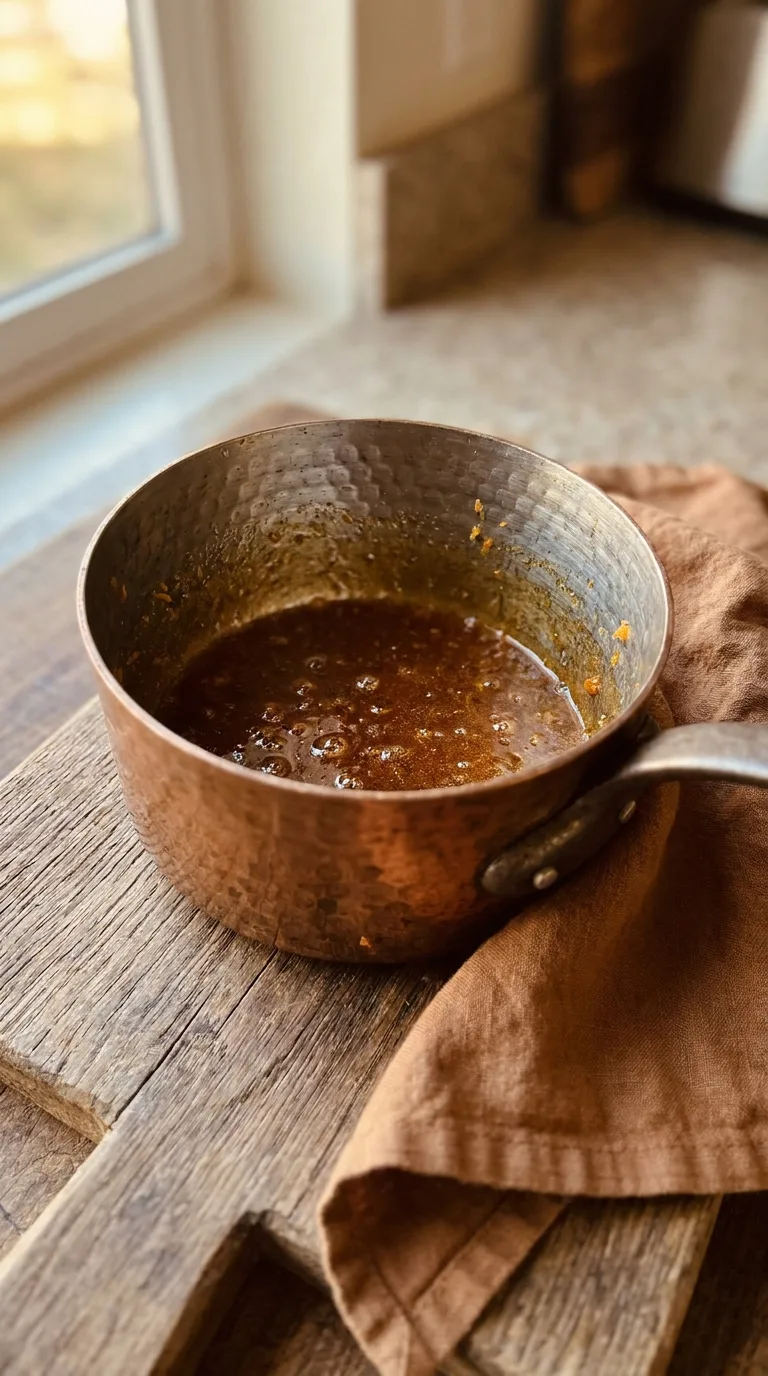
Melt butter in a small saucepan over low heat. Stir in brown sugar, orange juice, mustard and orange zest. Continue stirring for 3–4 minutes until the sugar dissolves and the mixture thickens slightly.
-
First bake
Brush half of the glaze over the thighs. Place the tray in the oven and bake for 25 minutes. The heat begins to set the glaze and cook the meat through.
-
Finish the roasting
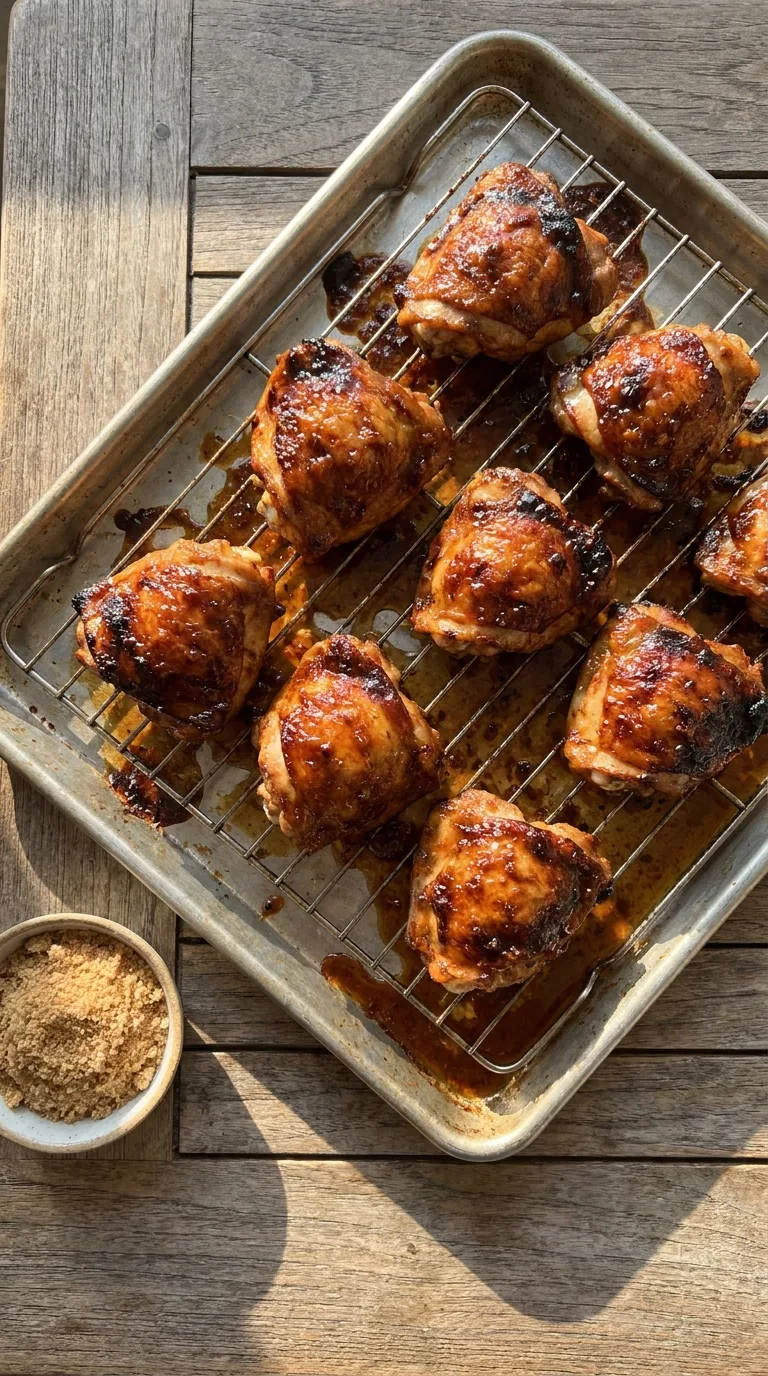
Flip the thighs and brush on the remaining glaze. Bake for another 20–25 minutes until the skin is golden brown. Use a thermometer to ensure the thickest part reaches 74°C (165°F).
-
Rest the meat
Remove the tray from the oven. Loosely tent the thighs with foil and allow them to rest for 10 minutes. This lets juices redistribute so the meat remains moist when sliced.
-
Reduce and serve
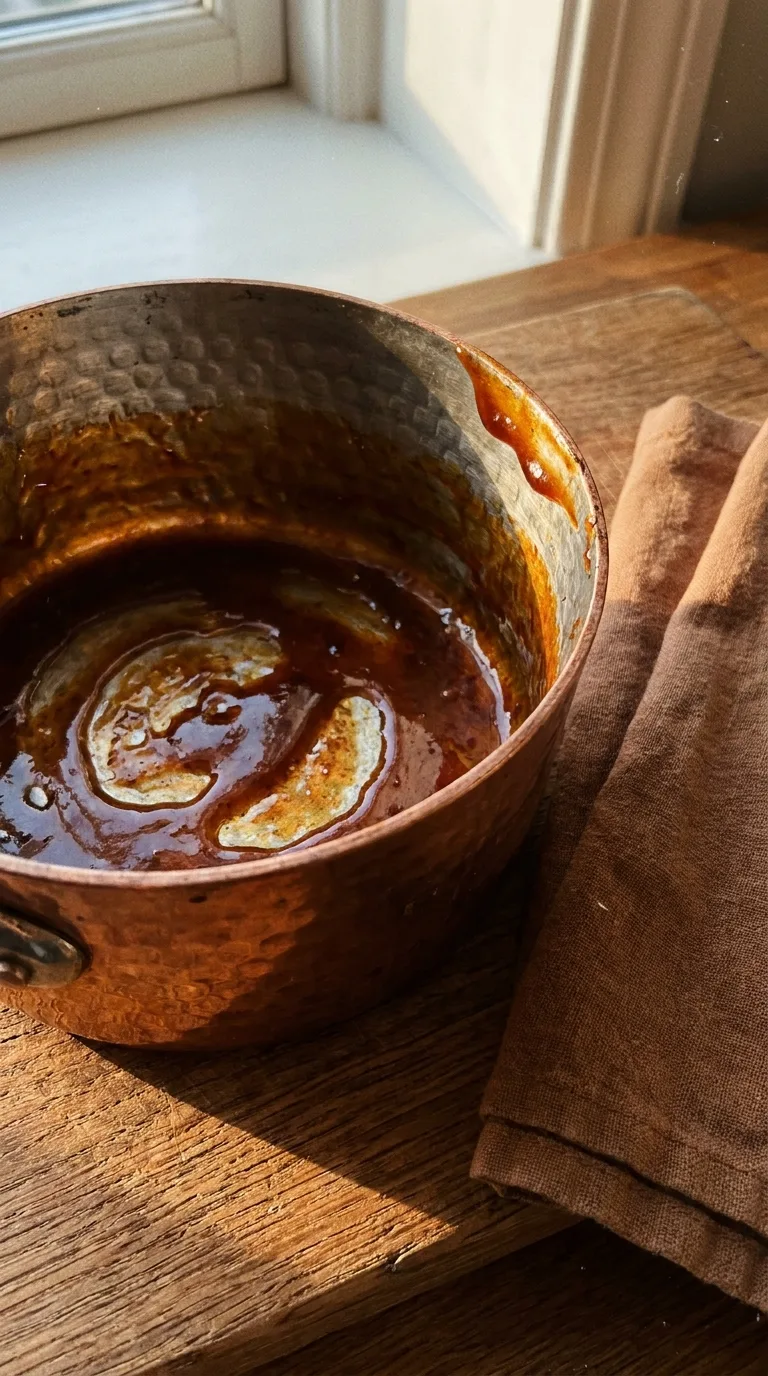
Reduce the leftover glaze in the saucepan over medium heat until it reaches 100ml. Drizzle this over the rested thighs. Plate the chicken and garnish with parsley and orange zest curls.
Watch the glaze carefully during the final minutes of roasting. Because of the high sugar content, the coating can turn from caramelised to burnt very quickly. If the edges look too dark before the internal temperature reaches 74°C (165°F), cover the tray loosely with foil to protect the skin.
How it differs from the traditional method
The wire rack allows hot air to circulate around the meat. This creates a crisp skin and prevents the chicken from stewing in its own juices. A traditional baking tray is better if you want to roast vegetables in the same pan to soak up the rendered fat.
What to serve with it
Pair these thighs with roasted root vegetables like carrots, parsnips and potatoes for a hearty Christmas meal. A light cranberry-berry sauce and a fresh green salad provide the necessary acidity to balance the rich, sweet glaze and the savoury notes of the smoked paprika.
Nutrition per serving
- Calories
- 410
- Protein
- 28.5 g
- Carbs
- 22.0 g
- Fat
- 24.0 g
- Fiber
- 1.2 g
- Sugar
- 18.5 g
Estimated, and offered as a guide rather than a medical figure.
Made it? Rate it.
Questions people ask
Is it better to bake chicken thighs at 350 or 400?
Bake them at 190°C (375°F). This temperature is the middle ground that ensures the meat cooks through to 74°C (165°F) without burning the sugar in the glaze before the centre is safe to eat.
Should chicken thighs be baked, covered or uncovered?
Bake them uncovered. Leaving the chicken exposed allows the skin to crisp and the glaze to caramelise. Covering the pan would trap steam, which results in soft skin and prevents the glaze from thickening.
How to bake chicken thighs so they are juicy?
Use an instant-read thermometer to ensure the thickest part reaches 74°C (165°F). Tent the meat with foil and let it rest for 10 minutes so the juices redistribute through the meat instead of running out.