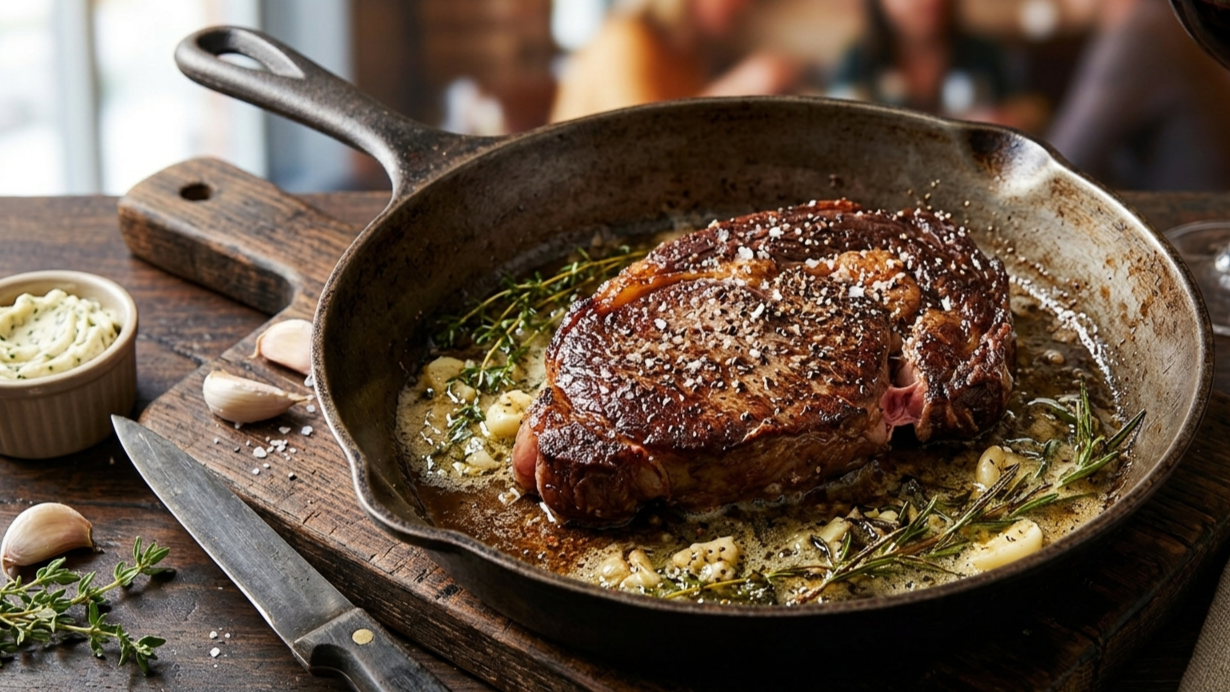
Few meals are as satisfying as a perfectly cooked Garlic Butter Pan-Seared Ribeye Steak. With its rich marbling, tender texture, and deeply savory flavor, ribeye is widely considered one of the finest cuts of beef. When seared in a hot skillet and finished with aromatic garlic butter, fresh herbs, and a gentle basting technique, the result is a steak with a beautifully caramelized crust and a juicy, melt-in-your-mouth center.
In this comprehensive guide, we cover everything you need to know about preparing the perfect pan-seared ribeye steak, from choosing the best cut of meat to mastering the cooking process, selecting the ideal seasonings, and serving it with delicious side dishes.
Why Ribeye Is the Best Steak for Pan Searing
Ribeye steak comes from the rib section of the cow, where generous marbling creates exceptional tenderness and flavor. During cooking, the fat melts into the meat, keeping every bite juicy and rich.
Unlike leaner cuts, ribeye develops an incredible golden-brown crust while remaining moist and buttery inside, making it the ideal choice for skillet cooking.
Ingredients for Garlic Butter Pan-Seared Ribeye Steak
For the Steak
- 2 ribeye steaks (1 to 1½ inches thick)
- 2 teaspoons kosher salt
- 1 teaspoon freshly ground black pepper
- 1 tablespoon avocado oil or vegetable oil
For the Garlic Butter
- 3 tablespoons unsalted butter
- 4 garlic cloves, lightly crushed
- 2 sprigs fresh rosemary
- 2 sprigs fresh thyme
Optional Garnishes
- Fresh parsley, chopped
- Flaky sea salt
- Fresh cracked black pepper
How to Choose the Best Ribeye Steak
When shopping for ribeye, look for:
- Abundant marbling throughout the meat
- Bright red color
- Firm texture
- Even thickness
- USDA Choice or USDA Prime grade when available
Steaks that are 1 to 1½ inches thick are ideal because they develop a flavorful crust without overcooking the interior.
Preparing the Steak Before Cooking
Remove the ribeye from the refrigerator 30 to 45 minutes before cooking.
Pat both sides completely dry with paper towels.
Season generously with kosher salt and freshly ground black pepper.
Allowing the steak to come closer to room temperature helps it cook more evenly.
Step-by-Step Garlic Butter Pan-Seared Ribeye Recipe
Step 1: Heat the Skillet
Place a heavy cast-iron skillet over high heat.
Allow it to become extremely hot before adding oil.
A properly heated skillet is essential for creating the perfect crust.
Step 2: Sear the Steak
Add the oil.
Carefully place the steaks into the skillet.
Do not move them for 3–4 minutes, allowing a deep golden-brown crust to develop.
Flip the steaks and cook the second side for another 3–4 minutes.
Step 3: Add the Garlic Butter
Reduce the heat to medium.
Add:
- Butter
- Garlic cloves
- Rosemary
- Thyme
As the butter melts, tilt the pan slightly.
Using a spoon, continuously baste the steaks with the hot butter for 1–2 minutes.
The garlic and herbs infuse the butter with incredible aroma and flavor.
Step 4: Check the Internal Temperature
Use an instant-read thermometer for perfect doneness:
| Doneness | Temperature |
|---|---|
| Rare | 120–125°F (49–52°C) |
| Medium Rare | 130–135°F (54–57°C) |
| Medium | 140–145°F (60–63°C) |
| Medium Well | 150–155°F (66–68°C) |
| Well Done | 160°F+ (71°C+) |
Remove the steak from the pan when it is 5°F below your desired final temperature, as it will continue cooking while resting.
Why Garlic Butter Makes Ribeye Even Better
Garlic butter enhances every element of the steak.
The butter adds richness, while garlic contributes sweet, roasted flavor as it cooks gently. Fresh rosemary and thyme release aromatic oils that complement the natural beef flavor without overpowering it.
The result is a luxurious finish worthy of a high-end steakhouse.
The Importance of Resting the Steak
Transfer the cooked steaks to a cutting board or warm plate.
Loosely tent with foil.
Allow the steak to rest for 5–10 minutes before slicing.
Resting redistributes the juices, ensuring every bite stays tender and flavorful.
Expert Tips for the Perfect Pan-Seared Ribeye
Use a Cast-Iron Skillet
Cast iron retains heat exceptionally well, creating the best possible sear.
Dry the Steak Thoroughly
Moisture prevents browning.
A dry surface promotes the flavorful crust created by the Maillard reaction.
Season Generously
Ribeye benefits from a liberal seasoning of salt and freshly cracked pepper.
Don’t Overcrowd the Pan
Cook one or two steaks at a time.
Crowding lowers the pan temperature and causes steaming instead of searing.
Baste Continuously
Spooning hot garlic butter over the steak helps cook it evenly while adding rich flavor.
Common Mistakes to Avoid
Cooking Cold Steak
Cold meat cooks unevenly.
Using a Cool Pan
The steak will steam rather than sear.
Flipping Too Often
Leave the steak undisturbed to develop a proper crust.
Skipping the Resting Period
Cutting too early causes flavorful juices to escape.
Overcooking
Use a thermometer for consistently accurate results.
Best Side Dishes for Ribeye Steak
Pair your garlic butter ribeye with classic steakhouse favorites:
- Garlic mashed potatoes
- Roasted baby potatoes
- Creamed spinach
- Grilled asparagus
- Roasted Brussels sprouts
- Buttered green beans
- Caesar salad
- Sautéed mushrooms
- Macaroni and cheese
- Crispy French fries
Sauces That Pair Perfectly with Ribeye
Although garlic butter is often enough, these sauces also complement ribeye beautifully:
- Peppercorn sauce
- Chimichurri
- Red wine reduction
- Béarnaise sauce
- Mushroom cream sauce
- Blue cheese butter
Wine Pairings
A rich ribeye pairs wonderfully with full-bodied red wines.
Excellent choices include:
- Cabernet Sauvignon
- Malbec
- Merlot
- Syrah
- Bordeaux blend
- Zinfandel
These wines complement the steak’s bold, beefy flavor and buttery finish.
Nutrition Information
Approximate values per serving:
- Calories: 720
- Protein: 46 g
- Fat: 58 g
- Carbohydrates: 2 g
- Fiber: 0 g
- Sodium: 620 mg
Nutritional values may vary depending on the size of the steak and the amount of butter used.
How to Store Leftover Ribeye
Allow the steak to cool completely.
Store in an airtight container in the refrigerator for up to 3 days.
For longer storage, freeze for up to 3 months.
How to Reheat Without Drying Out
Warm the steak gently in a skillet over low heat with a small amount of butter.
Alternatively, reheat in a 250°F (120°C) oven until warmed through.
Avoid high heat or prolonged microwaving, which can make the meat tough.
Frequently Asked Questions
Can I Use a Different Cut of Steak?
Yes. New York strip, filet mignon, sirloin, and porterhouse all work well, though ribeye remains the most flavorful due to its marbling.
Should I Marinate Ribeye?
A high-quality ribeye generally does not require a marinade. Simple seasoning with salt and pepper allows the natural beef flavor to shine.
Can I Cook Ribeye Without Cast Iron?
Yes. A heavy stainless-steel skillet is a good alternative, but cast iron delivers the best crust.
Why Is My Steak Tough?
Overcooking, slicing before resting, or choosing a lower-quality cut can result in a tougher texture.
How Thick Should Ribeye Be?
Steaks between 1 and 1½ inches thick provide the best balance of a crisp exterior and a juicy interior.
Final Thoughts
A Garlic Butter Pan-Seared Ribeye Steak is one of the easiest ways to enjoy a restaurant-quality meal at home. With premium ribeye, a scorching hot skillet, fragrant garlic butter, and fresh herbs, you can create a steak that boasts a deeply caramelized crust, a tender and juicy center, and unforgettable flavor. Whether you’re preparing a special dinner or simply treating yourself to an exceptional meal, this classic recipe delivers impressive results every time.
If you enjoyed this recipe, share it with friends and family, and bookmark this page for more delicious steak recipes, cooking techniques, and gourmet meal ideas.