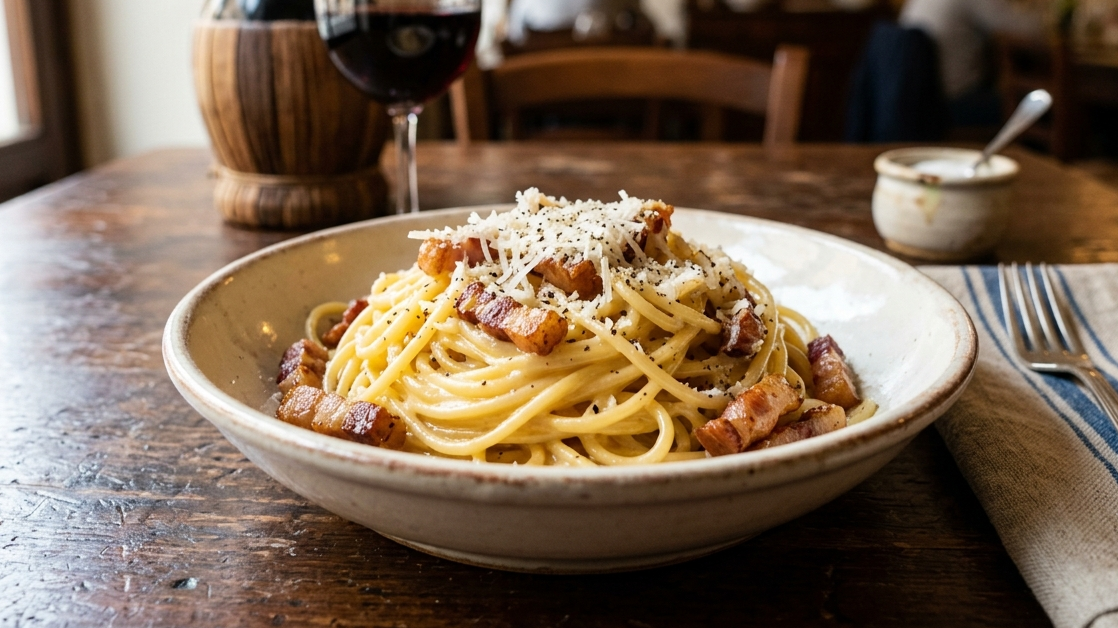
Classic Spaghetti Carbonara is one of Italy’s most iconic pasta dishes, celebrated for its simplicity, rich flavor, and perfectly balanced ingredients. Made with spaghetti, eggs, Pecorino Romano cheese, guanciale, and freshly ground black pepper, authentic Carbonara contains no cream, garlic, onions, or butter. The creamy texture comes entirely from the careful emulsification of eggs, cheese, and hot pasta water.
In this complete guide, we explore everything needed to prepare a flawless traditional Spaghetti Carbonara, including ingredient selection, cooking techniques, expert tips, common mistakes, variations, serving ideas, and storage recommendations.
What Is Classic Spaghetti Carbonara?
Spaghetti Carbonara originated in the Lazio region of Italy, particularly in Rome, where it remains one of the city’s signature dishes. The recipe relies on a handful of premium ingredients combined with proper technique to create an exceptionally creamy, flavorful pasta.
Unlike many modern adaptations, authentic Carbonara never includes heavy cream. Instead, the silky sauce develops naturally when beaten eggs and grated cheese are mixed with hot pasta and rendered guanciale fat.
The result is a luxurious coating that clings to every strand of spaghetti while highlighting the smoky richness of cured pork and the sharp bite of Pecorino Romano.
Ingredients for Authentic Spaghetti Carbonara
Main Ingredients
- 400 g spaghetti
- 150 g guanciale, diced
- 3 large egg yolks
- 1 whole egg
- 100 g freshly grated Pecorino Romano cheese
- Freshly cracked black pepper
- Salt for pasta water
Why Each Ingredient Matters
Spaghetti
Traditional Carbonara uses high-quality durum wheat spaghetti because its firm texture holds the creamy sauce beautifully while remaining perfectly al dente.
Guanciale
Guanciale is cured pork cheek with abundant flavorful fat. During cooking, the fat slowly renders, creating the signature savory richness of Carbonara.
If guanciale cannot be found:
- Pancetta is the closest substitute.
- Thick-cut unsmoked bacon can work but changes the authentic flavor.
Eggs
Egg yolks provide richness while one whole egg contributes structure and creaminess without scrambling.
Pecorino Romano
Made from sheep’s milk, Pecorino Romano delivers the sharp, salty flavor that defines traditional Carbonara.
Freshly grate the cheese immediately before cooking for optimal melting.
Black Pepper
Freshly cracked black pepper provides warmth and aroma that perfectly balance the richness of the cheese and pork.
Step-by-Step Classic Carbonara Recipe
Step 1: Boil the Pasta
Bring a large pot of generously salted water to a rolling boil.
Cook the spaghetti until al dente, following the package instructions.
Reserve at least 1 cup of pasta water before draining.
Never rinse the pasta.
Step 2: Cook the Guanciale
Place diced guanciale into a cold skillet.
Cook over medium heat.
Allow the fat to render slowly while the meat becomes crispy without burning.
Remove from heat once golden brown.
Leave all rendered fat in the pan.
Step 3: Prepare the Egg Mixture
In a mixing bowl combine:
- Egg yolks
- Whole egg
- Pecorino Romano
- Plenty of freshly cracked black pepper
Whisk until thick, smooth, and creamy.
Step 4: Combine Everything
Transfer the hot spaghetti into the skillet containing the guanciale.
Toss well so every strand becomes coated with the rendered fat.
Allow the pasta to cool for about 30 seconds.
Add the egg mixture.
Quickly toss continuously.
Gradually add reserved pasta water until the sauce becomes silky and glossy.
Serve immediately.
The Secret to Creamy Carbonara Without Cream
The luxurious sauce comes from an emulsion.
The combination of:
- Hot pasta
- Egg yolks
- Pecorino Romano
- Guanciale fat
- Starchy pasta water
creates a naturally creamy consistency.
The temperature must remain warm enough to thicken the eggs but never hot enough to scramble them.
Choosing the Best Pasta
While spaghetti is traditional, several pasta varieties work beautifully.
Excellent options include:
- Spaghetti
- Rigatoni
- Tonnarelli
- Mezze Maniche
- Bucatini
Long pasta captures the sauce elegantly, while tubular pasta traps crispy guanciale inside every bite.
Traditional Italian Carbonara vs Creamy Restaurant Versions
Authentic Italian Carbonara differs significantly from many international adaptations.
| Traditional Carbonara | Cream-Based Version |
|---|---|
| Eggs only | Heavy cream |
| Pecorino Romano | Parmesan blends |
| Guanciale | Bacon |
| No garlic | Garlic often included |
| No butter | Butter frequently added |
| Natural emulsion | Thick cream sauce |
Traditional Carbonara offers deeper flavor while remaining lighter than cream-based alternatives.
Expert Tips for Perfect Carbonara
Use Freshly Grated Cheese
Pre-shredded cheese often contains anti-caking agents that prevent smooth melting.
Freshly grated Pecorino creates a silkier sauce.
Reserve Plenty of Pasta Water
Starchy water helps emulsify the sauce.
Adding it gradually gives complete control over consistency.
Cook Guanciale Slowly
Rendering the fat gently develops maximum flavor.
Avoid high heat.
Never Overcook the Eggs
Remove the pan from direct heat before adding the egg mixture.
Residual heat cooks the sauce perfectly.
Serve Immediately
Carbonara is best enjoyed moments after preparation.
Waiting causes the sauce to thicken excessively.
Common Mistakes to Avoid
Using Cream
Cream masks the authentic flavors.
Scrambling the Eggs
Excessive heat ruins the silky texture.
Overcooking the Pasta
Al dente pasta provides the ideal bite.
Adding Too Much Salt
Guanciale and Pecorino are naturally salty.
Taste before seasoning.
Skipping Pasta Water
Without starch, the sauce becomes thick and clumpy.
Nutrition Information
Approximate values per serving:
- Calories: 650
- Protein: 27 g
- Fat: 29 g
- Carbohydrates: 67 g
- Fiber: 3 g
- Calcium: 25% Daily Value
Values vary according to ingredient brands and serving sizes.
Best Side Dishes for Carbonara
Complete your Italian meal with:
- Mixed green salad
- Garlic-free focaccia
- Roasted asparagus
- Grilled zucchini
- Bruschetta
- Marinated olives
- Roasted cherry tomatoes
Wine Pairings
Classic Carbonara pairs exceptionally well with crisp Italian wines.
Recommended choices include:
- Pinot Grigio
- Frascati
- Verdicchio
- Soave
- Vermentino
For red wine lovers:
- Chianti
- Barbera
Variations of Carbonara
Although traditional Carbonara remains unmatched, several variations are popular.
Mushroom Carbonara
Adds earthy richness.
Seafood Carbonara
Prepared with shrimp or scallops.
Vegetarian Carbonara
Uses smoked mushrooms instead of guanciale.
Whole Wheat Carbonara
Provides extra fiber while maintaining excellent texture.
How to Store Leftovers
Place cooled Carbonara into an airtight container.
Refrigerate for up to 2 days.
Because the sauce contains eggs, freezing is not recommended.
How to Reheat Carbonara Properly
Heat gently in a skillet over low temperature.
Add:
- A splash of water
- Or a spoonful of pasta water
Stir constantly until warmed.
Avoid microwaving at high power, which may scramble the sauce.
Frequently Asked Questions
Can I Use Parmesan Instead of Pecorino Romano?
Yes, although Pecorino Romano provides the authentic sharp, salty flavor associated with traditional Roman Carbonara.
Is Bacon Authentic?
No.
Traditional Carbonara always uses guanciale.
Why Did My Eggs Scramble?
The pasta was too hot when the eggs were added.
Allow the pasta to cool briefly before mixing.
Can Carbonara Be Made Ahead?
Carbonara is intended to be served immediately after cooking for the best texture and flavor.
What Makes Carbonara Creamy Without Cream?
The emulsion formed by eggs, cheese, rendered guanciale fat, and starchy pasta water creates its signature creamy consistency.
Final Thoughts
Classic Spaghetti Carbonara remains one of the finest examples of Italian cuisine, proving that exceptional dishes require only a few carefully chosen ingredients and proper technique. By using quality spaghetti, authentic guanciale, fresh eggs, Pecorino Romano, and plenty of black pepper, you can recreate the unmistakable taste of Rome in your own kitchen. With attention to timing and emulsification, every serving delivers a velvety sauce, perfectly cooked pasta, and a depth of flavor that has made Carbonara a beloved classic around the world.
If you enjoyed this recipe, share it with friends and family, and bookmark this page for more authentic Italian recipes, cooking guides, and kitchen tips.