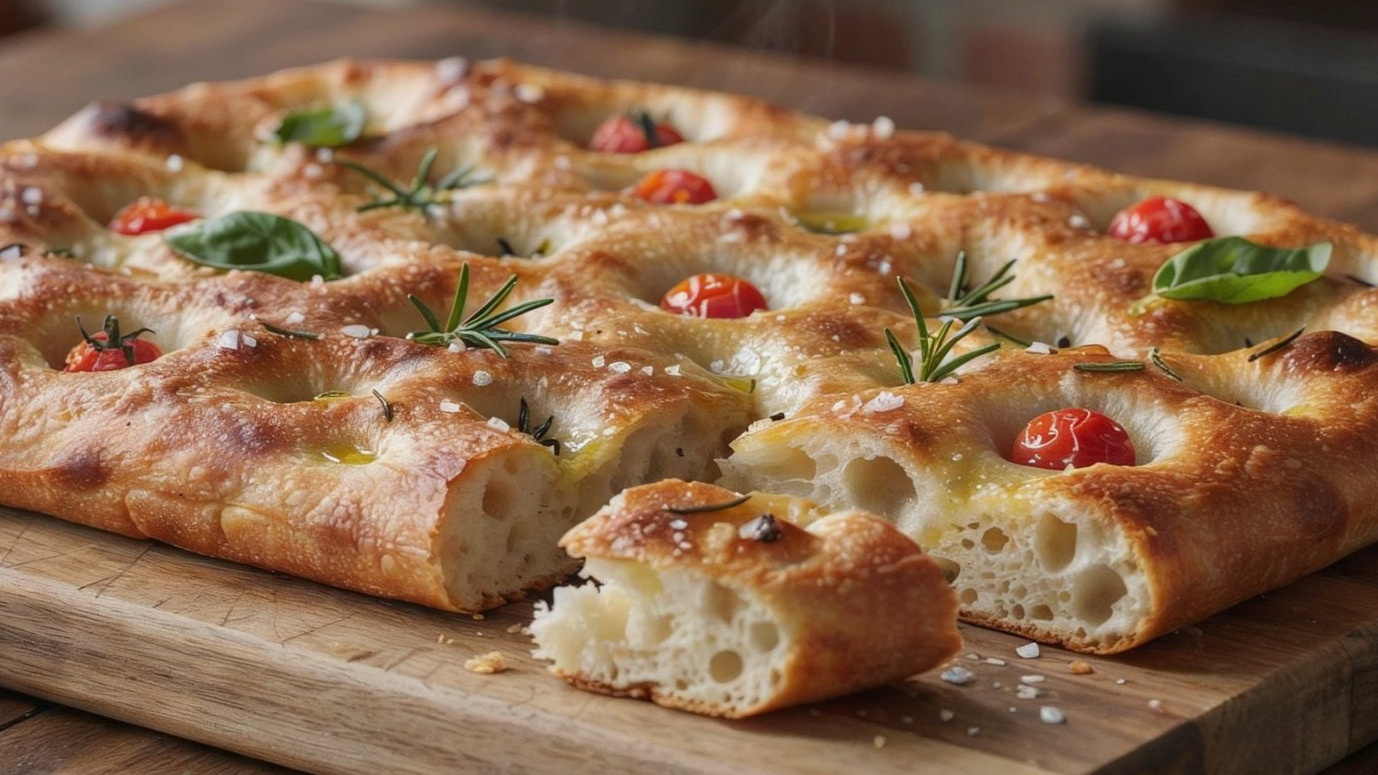
Classic Focaccia Bread is one of Italy’s most beloved flatbreads, celebrated for its light, airy crumb, crispy golden crust, and rich olive oil flavor. Originating from the Liguria region, this timeless bread is known for its signature dimples, flaky sea salt topping, and fragrant herbs. Whether served as an appetizer, side dish, sandwich bread, or snack, homemade focaccia delivers bakery-quality results with simple pantry ingredients.
Unlike ordinary bread, focaccia is generously coated with extra virgin olive oil, giving it a tender interior and irresistibly crisp exterior. Fresh rosemary, flaky sea salt, and optional toppings such as cherry tomatoes, olives, caramelized onions, or roasted garlic make this versatile bread perfect for every occasion.
In this complete guide, you’ll learn how to make Classic Focaccia Bread from scratch, including ingredient selection, dough preparation, proofing techniques, baking tips, delicious variations, storage methods, and answers to frequently asked questions.
Why You’ll Love This Classic Focaccia Bread
This authentic recipe has become a favorite because it is:
- Soft and airy on the inside
- Golden and crispy on the outside
- Made with simple pantry ingredients
- Perfect for beginners
- Highly versatile with endless toppings
- Excellent for sandwiches and appetizers
- Great for meal prep
- Freezer-friendly
- Authentically Italian
What Is Focaccia Bread?
Focaccia is a traditional Italian yeast bread characterized by its flat shape, dimpled surface, and generous use of olive oil. The dough is similar to pizza dough but contains more olive oil and hydration, creating a softer, more open crumb.
After proofing, the dough is gently stretched into a baking pan, dimpled with fingertips, drizzled with olive oil, sprinkled with flaky sea salt, and baked until beautifully golden.
The result is a flavorful bread that is delicious on its own or paired with soups, salads, pasta dishes, and charcuterie boards.
Ingredients for Classic Focaccia Bread
For the Dough
- 4 cups bread flour
- 2¼ teaspoons active dry yeast (1 packet)
- 1¾ cups warm water (about 105–110°F / 40–43°C)
- 2 teaspoons kosher salt
- 2 tablespoons extra virgin olive oil
- 1 teaspoon granulated sugar
For the Topping
- 3 tablespoons extra virgin olive oil
- 2 teaspoons flaky sea salt
- 2 tablespoons fresh rosemary leaves
Optional Toppings
- Cherry tomatoes
- Kalamata olives
- Roasted garlic cloves
- Thinly sliced onions
- Fresh thyme
- Parmesan cheese
Why These Ingredients Matter
Bread Flour
Bread flour has a higher protein content than all-purpose flour, producing a stronger gluten structure and a chewier texture.
Extra Virgin Olive Oil
High-quality olive oil is essential for authentic focaccia. It enriches the dough while creating the signature crispy crust.
Yeast
Active dry yeast helps the dough rise, producing a light, airy interior.
Fresh Rosemary
Rosemary is the traditional herb used for classic focaccia, adding an earthy, aromatic flavor.
Flaky Sea Salt
Large flakes of sea salt enhance both flavor and texture.
Step-by-Step Classic Focaccia Bread Recipe
Step 1: Activate the Yeast
In a large bowl, combine:
- Warm water
- Sugar
- Active dry yeast
Let the mixture sit for 5–10 minutes until foamy.
Step 2: Make the Dough
Add:
- Bread flour
- Salt
- Olive oil
Mix until a sticky dough forms.
Knead by hand for 8–10 minutes, or use a stand mixer with a dough hook for 6–8 minutes, until the dough becomes smooth and elastic.
Step 3: First Rise
Place the dough in a lightly oiled bowl.
Cover with plastic wrap or a damp towel.
Allow it to rise in a warm place for 1–2 hours, or until doubled in size.
Step 4: Prepare the Baking Pan
Generously coat a 9×13-inch baking pan with olive oil.
Transfer the dough to the pan.
Gently stretch it toward the edges without deflating it.
Cover and let it rise again for 30–45 minutes.
Step 5: Create the Signature Dimples
Preheat the oven to 425°F (220°C).
Drizzle the dough generously with olive oil.
Using your fingertips, press deep dimples all over the surface.
Sprinkle with:
- Fresh rosemary
- Flaky sea salt
Add any optional toppings if desired.
Step 6: Bake
Bake for 22–28 minutes, until the focaccia is deep golden brown with crisp edges.
The internal temperature should reach approximately 200°F (93°C).
Step 7: Cool and Serve
Remove the focaccia from the pan.
Allow it to cool on a wire rack for 10–15 minutes before slicing.
Serve warm or at room temperature.
Tips for Perfect Focaccia Bread
Use High-Quality Olive Oil
Since olive oil is one of the main flavors, choose a robust extra virgin variety.
Don’t Skip the Second Rise
The second proof creates the bread’s signature airy texture.
Make Deep Dimples
The dimples hold olive oil and toppings while creating the classic appearance.
Handle the Dough Gently
Avoid overworking the dough after the first rise to preserve its air pockets.
Bake Until Deep Golden
Proper browning develops the best flavor and crispy crust.
Common Mistakes to Avoid
Using Cold Water
Cold water slows yeast activity and reduces rise.
Adding Too Much Flour
Focaccia dough should be soft and slightly sticky.
Skipping the Olive Oil
Olive oil is essential for both texture and authentic flavor.
Under-Proofing the Dough
Insufficient rising leads to dense bread.
Overbaking
Too much time in the oven can dry out the crumb.
Delicious Focaccia Variations
Rosemary and Sea Salt Focaccia
The timeless classic featuring fresh rosemary and flaky sea salt.
Tomato Basil Focaccia
Top with halved cherry tomatoes and fresh basil leaves.
Garlic Parmesan Focaccia
Add roasted garlic cloves and freshly grated Parmesan before baking.
Olive Focaccia
Scatter Kalamata or Castelvetrano olives over the dough.
Caramelized Onion Focaccia
Top with sweet caramelized onions and fresh thyme.
Best Ways to Serve Focaccia
Fresh focaccia pairs beautifully with:
- Olive oil and balsamic vinegar
- Pasta dishes
- Italian soups
- Caesar salad
- Antipasto platters
- Charcuterie boards
- Roasted vegetables
- Grilled meats
- Sandwiches
- Bruschetta toppings
Nutrition Information
Approximate values per serving:
- Calories: 250
- Protein: 6 g
- Fat: 8 g
- Carbohydrates: 37 g
- Fiber: 2 g
- Sodium: 340 mg
Values may vary depending on toppings and serving size.
Storage Instructions
Store cooled focaccia in an airtight container at room temperature for up to 2 days.
For longer storage, refrigerate for up to 5 days or freeze for up to 3 months.
Wrap tightly in plastic wrap and aluminum foil before freezing.
How to Reheat
Warm slices in a 350°F (175°C) oven for 5–8 minutes until heated through.
Alternatively, toast slices lightly for a crisp exterior.
Avoid microwaving for extended periods, as it can make the bread chewy.
Frequently Asked Questions
Can I Use All-Purpose Flour?
Yes. While bread flour provides a chewier texture, all-purpose flour still produces excellent focaccia.
Can I Make the Dough Overnight?
Absolutely. Refrigerating the dough overnight develops deeper flavor and improves texture.
Why Is My Focaccia Dense?
Dense focaccia usually results from insufficient proofing or adding too much flour.
Can I Freeze Focaccia?
Yes. Slice the bread before freezing so individual portions can be thawed as needed.
Can I Add Cheese?
Yes. Parmesan, mozzarella, Asiago, or Pecorino Romano all make delicious additions.
Health Benefits of Homemade Focaccia
Homemade focaccia allows you to control the quality of ingredients while avoiding unnecessary preservatives found in many store-bought breads. Extra virgin olive oil provides heart-healthy monounsaturated fats and antioxidants, while fresh herbs like rosemary contribute natural flavor and beneficial plant compounds. Enjoyed in moderation as part of a balanced diet, focaccia is a satisfying addition to meals and gatherings.
Final Thoughts
Classic Focaccia Bread is a timeless Italian favorite that combines simple ingredients with traditional baking techniques to create an unforgettable loaf. With its crisp golden crust, soft and airy interior, fragrant olive oil, and signature rosemary topping, this versatile bread is perfect for everything from casual family dinners to elegant entertaining. Once you experience the flavor and texture of freshly baked homemade focaccia, it is sure to become a regular part of your baking repertoire.
If you enjoyed this recipe, share it with friends and family, and bookmark this page for more authentic Italian bread recipes, homemade baking guides, and delicious artisan favorites.